Quick answer: Bolivia Salar de Uyuni is best planned around the season you want: mirror reflections in rainy months or dry white salt patterns in clearer months.
Bolivia Salar de Uyuni 2026: Salt Flats, Mirror Season and Budget Planning
What You Will Find in This Guide
Best places and itinerary ideas
Budget and booking tips for 2026
Internal CNC Travel resources for deeper planning
Official external resources for updated details
FAQ answers written for search intent
Why Salar de Uyuni fits 2026 travel
Salar de Uyuni is one of the strongest examples of a destination that feels unreal but requires very real planning. Photos show mirror skies, endless salt and strange perspective shots, but the reader still needs to understand seasons, altitude, transfers, tour quality and weather risk.
That combination makes it a powerful 2026 search topic. It satisfies visual intent and practical intent at the same time, which is exactly what a travel article needs if the goal is organic traffic and AdSense engagement.
Mirror season vs dry season
Mirror season usually falls during the rainy months, often January through March, when shallow water can create sky reflections. Dry season, often May through October, is better for geometric salt patterns, clearer access and night-sky tours.
Neither season is automatically better. Choose mirror season for surreal photography, dry season for reliability and cleaner logistics. If you care about the mirror effect, check recent local tour reports before locking your date.
Tour options and routes
Most travelers start from Uyuni town. A one-day tour covers the classic salt flat highlights, while a three-day route adds lagoons, deserts, flamingos and high-altitude landscapes. If you are arriving from La Paz, avoid stacking a night bus, tour and long onward transfer without rest.
Cross-border routes toward Chile can be efficient, but they need more planning. Confirm border conditions, luggage limits, included meals and sleeping arrangements before choosing the cheapest operator.
Budget, altitude and packing tips
Compare operators by vehicle condition, reviews, group size and what is included. Bring sunglasses, sunscreen, water, layers, a hat and a power bank. The sun and altitude can make easy days feel harder than expected.
Altitude is the detail many first-time visitors underestimate. Build in an easier first day, hydrate well and do not plan intense activities immediately after arriving from sea level.
Helpful Planning Links
Use these related CNC Travel guides to continue planning this trip from another angle.
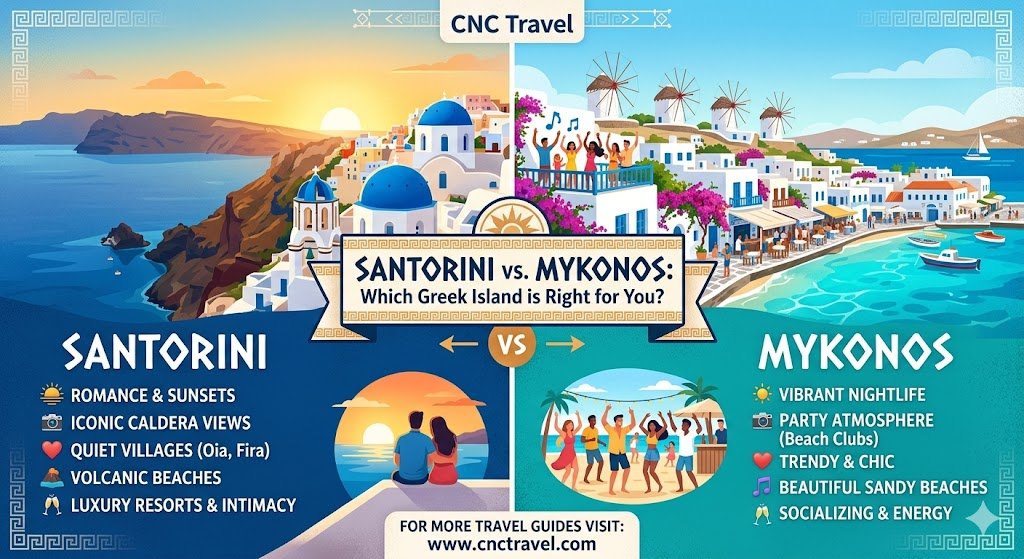
Quick answer: Santorini vs. Mykonos is easiest to plan when you compare season, total trip cost, transport, where to stay and the main experience you want before booking.
Two legendary islands, two completely different experiences. Here’s everything you need to make the perfect choice for your Greece vacation.
Planning a trip to Greece and torn between Santorini and Mykonos? You’re not alone. These two Cycladic islands consistently rank among the world’s most desirable destinations — yet they attract very different types of travelers. Choosing the wrong one for your travel style can be a costly mistake.
Santorini and Mykonos both belong to the Cyclades island group in the Aegean Sea and are just 45 minutes apart by high-speed ferry — yet stepping onto each one feels like entering a completely different universe.
🌅 Santorini
Romantic · Scenic · Refined
Dramatic caldera & cliffside views
World-famous sunsets in Oia
Volcanic beaches (black & red sand)
Excellent local wines (Assyrtiko)
Ancient ruins of Akrotiri
Relaxed, romantic atmosphere
🎉 Mykonos
Lively · Social · Cosmopolitan
World-class beach clubs
Legendary nightlife scene
Gorgeous white-sand beaches
LGBTQ+ welcoming & inclusive
Charming windmills & Little Venice
Day trips to ancient Delos
Santorini: The Romantic Dreamer
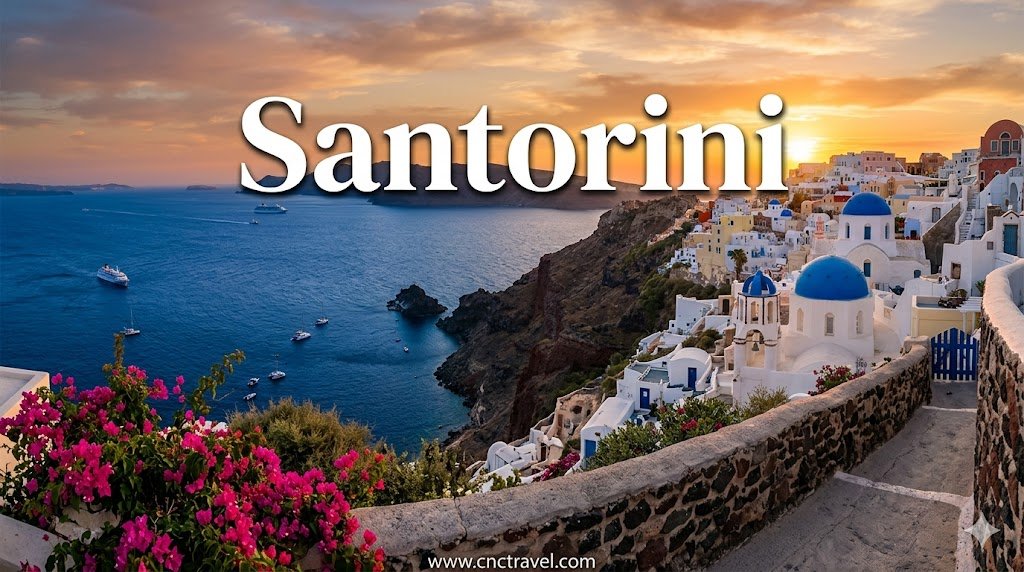
Santorini is built on the rim of a dormant volcano, and that geological drama is the heart of everything that makes it special. The iconic caldera — a vast, flooded volcanic crater — provides a backdrop unlike anywhere else on Earth. Whitewashed villages cling to the clifftops of Fira, Oia, and Imerovigli, offering some of the most photographed views in the world.
What Makes Santorini Special
Beyond the scenery, Santorini has a refined culinary and wine culture. The island’s volcanic soil produces the unique Assyrtiko grape, yielding crisp, mineral-driven white wines celebrated across Europe. Many restaurants sit perched over the caldera, offering a dining experience that is genuinely hard to match anywhere.
History lovers will appreciate the archaeological site of Akrotiri — a Bronze Age city buried by volcanic ash around 1600 BCE, often called the “Greek Pompeii.” It’s one of the most significant prehistoric settlements in the Aegean and a must-visit for culturally minded travelers.
💡
Insider tip: Book your caldera-view hotel or restaurant table at least 3–4 months in advance for summer visits. Capacity is limited and demand is enormous. Also read our guide on the best villages to stay in Santorini for neighborhood-by-neighborhood advice.
Best Areas to Stay in Santorini
Oia — most picturesque, best for sunsets and honeymoons
Imerovigli — highest point, quieter, dramatic caldera views
Fira — most central and lively, good transport links
Akrotiri — near the famous red beach, more authentic feel
Mykonos: The Social Butterfly
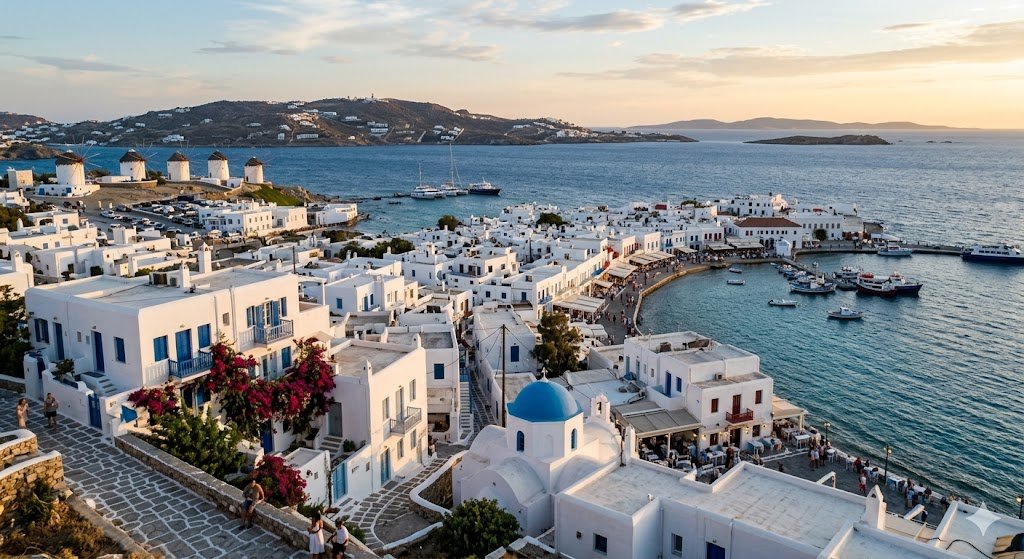
Mykonos has a well-earned reputation as the party capital of the Greek islands, but reducing it to just a party destination would be unfair. The island’s old town — known as Chora — is one of the most charming in all the Cyclades, with meandering alleys, famous windmills, and the picturesque waterfront area called Little Venice.
What Makes Mykonos Special
The beaches here are genuinely excellent — wide, sandy, and well-organized. Paradise Beach and Super Paradise Beach are the famous party beaches with all-day DJ sets, but there are quieter options too. Agios Ioannis, Panormos, and Fokos offer a more peaceful atmosphere for those who prefer a sunbed to a dance floor.
One of Mykonos’s greatest hidden assets is the nearby island of Delos — one of Greece’s most important UNESCO World Heritage archaeological sites. A 30-minute boat ride gets you to an entire uninhabited ancient island that was once the holiest sanctuary in the Aegean world.
ℹ️
Did you know? Mykonos is consistently rated as one of the most LGBTQ+-friendly destinations in Europe. The island has a long tradition of inclusion dating back to the 1970s. See our internal guide on LGBTQ+ travel in Mykonos for full details.
Side-by-Side Comparison
Use this table for a quick at-a-glance comparison of both islands across the most important categories:
Category
🌅 Santorini
🎉 Mykonos
Vibe
Romantic, scenic, refined
Social, lively, cosmopolitan
Best For
Couples, honeymooners
Friend groups, solo travelers
Beaches
Unique (volcanic, dramatic)
Better swimming, wider sandy
Nightlife
Low-key, wine bars
World-class clubs & beach parties
Food Scene
Excellent (volcanic wine focus)
Excellent (international variety)
Culture & History
★★★★★
★★★★☆
Scenery
★★★★★ (iconic caldera)
★★★★☆ (charming town)
Average Hotel Cost/Night
€180–€600+
€150–€500+
Crowds (July–Aug)
Very crowded
Very crowded
LGBTQ+ Friendly
Yes
Especially so
Good for Families
Moderate
Moderate
Getting Around
Bus, ATV, taxi (limited)
Bus, ATV, taxi, scooter
Beaches: Which Island Wins?
This is one area where the two islands are genuinely very different. Mykonos wins on beach quality for most travelers seeking classic sandy shores ideal for swimming and sunbathing.
Santorini’s Beaches
Santorini’s beaches are unique rather than traditionally beautiful. The famous Red Beach (Kokkini Paralia) features striking crimson cliffs and volcanic pebbles. The Black Beach at Kamari and Perissa is dramatic, though the dark sand absorbs heat quickly. These beaches are better for the experience and photos than long swims.
Mykonos’s Beaches
Mykonos delivers classic Mediterranean sand and crystal-clear water. Elia is the longest and arguably most beautiful. Agios Sostis is a raw, unspoiled stretch with no sun beds — just nature. And if you want to party, Paradise and Super Paradise deliver world-famous beach club energy. Learn more in our complete Mykonos beach guide.
Nightlife & Food: Two Different Scenes
Both islands have excellent dining, but the nightlife differs dramatically.
Santorini Dining & Nightlife
Santorini’s restaurants are among the most atmospheric in Greece — many perched on the caldera edge with sweeping views. The focus is on fine dining, local wine, and fresh seafood. Evenings tend to be about sunset cocktails and long dinners rather than dancing. Wine tasting at local estates like Santo Wines is a quintessential Santorini experience.
Mykonos Dining & Nightlife
Mykonos has a vibrant and truly international dining scene, from fresh Greek tavernas in the backstreets of Chora to celebrity-chef restaurants on the waterfront. After dinner, the island comes alive — clubs like Cavo Paradiso have hosted global DJs for decades and are genuinely world-class. The party scene typically runs until well after sunrise.
Cost & Budget: What to Expect
Both Santorini and Mykonos sit firmly in the premium tier of European travel destinations. Budget travel is difficult, though not impossible.
⚠️
Budget warning: Peak season (July–August) prices can be 2–3x higher than shoulder season. Visiting in May, June, or September saves significantly on accommodation while still delivering excellent weather. Read our article on the best time to visit the Greek islands for full seasonal breakdowns.
Mykonos: €130–€280/day (can spike sharply if clubbing)
Budget tip: Stay in Fira (Santorini) or inland Mykonos Town — views cost a premium
For comprehensive, up-to-date pricing, the Numbeo cost of living database provides crowd-sourced pricing data for both islands.
Who Should Choose Which Island?
Choose Santorini if you…
Are traveling as a couple or on a honeymoon
Prioritize scenery and photography over beach time
Love wine, fine dining, and sunset views
Enjoy history and archaeology (Akrotiri is world-class)
Want a relaxed, slower pace
Choose Mykonos if you…
Are traveling with a group of friends
Love beach clubs, dancing, and nightlife
Want the best swimming beaches
Identify as LGBTQ+ and want an inclusive scene
Want a cosmopolitan, high-energy holiday
✈️
Pro tip: Do both! Many travelers do Santorini + Mykonos in a single trip. A 7–10 day itinerary gives you 3–4 days on each island. The Seajets and Hellenic Seaways high-speed ferries connect them in about 45 minutes. See our ultimate Greece island-hopping itinerary for a suggested route.
🏆 The Final Verdict
There’s no universally “better” island — only the right one for you.
🌅 Choose Santorini for…
Romance, breathtaking scenery, wine culture, history, and a slower, more intimate atmosphere.
🎉 Choose Mykonos for…
Beach parties, nightlife, social scenes, great swimming beaches, and a cosmopolitan energy.
💑 Best for couples
Santorini — the sunsets, caldera views, and intimate dining are tailor-made for romance.
🎊 Best for groups
Mykonos — beach clubs, nightlife, and social atmosphere make it ideal for friend groups.
FAQ: Santorini vs. Mykonos
Can I visit both Santorini and Mykonos in one trip?
Absolutely. A 7–10 day trip with 3–4 days on each island is one of the most popular Greece itineraries. High-speed ferries run regularly between the two islands and take approximately 45 minutes to 2 hours depending on the service.
Which island is better for families with children?
Neither island is specifically designed for families, but Santorini is slightly calmer. The Kamari and Perivolos beach areas have good family facilities. Mykonos’s party-heavy reputation may not suit families with young children, though the quieter north of the island is perfectly family-friendly.
When is the best time to visit either island?
Late May, June, and September offer the best balance of good weather, manageable crowds, and lower prices. July and August are peak season — beautiful, but extremely crowded and expensive. See our full guide on the best time to visit the Cyclades.
Is Santorini or Mykonos more expensive?
Both are premium destinations. Santorini’s caldera-view hotels can be the most expensive in all of Greece. Mykonos beach club costs and VIP tables can also add up rapidly. Overall, costs are comparable for mid-range travelers, but Santorini’s iconic accommodation tends to carry the higher premium.
A stronger Santorini vs. Mykonos plan starts with intent. Decide whether the trip is about price, scenery, comfort, food, events, outdoor access or a specific bucket-list moment. That decision makes the rest of the planning easier because every hotel, transfer and activity can be judged against the same goal.
For 2026, travelers should also compare total trip cost instead of only headline prices. A cheap hotel can become expensive if transport is weak, while a slightly higher nightly rate can save money if it includes breakfast, transit access or a better location.
Budget and Booking Tips
Book refundable accommodation early, then keep comparing prices.
Check airport, train or bus access before choosing where to stay.
Plan one main paid experience per day instead of overloading the itinerary.
Use grocery stops, local transport and shoulder-season dates to control costs.
Keep a small buffer for weather, delays, luggage storage or last-minute transfers.
Before finalizing the trip, check an official resource for current rules, entry requirements, park access, event details or health guidance: European Union travel information.
Common Mistakes to Avoid
The most common mistake is planning from one viral photo or one cheap price. A useful itinerary checks distance, opening times, weather, local holidays, transfer costs and whether the experience still works if plans change.
Another mistake is ignoring the first and last day. Arrival and departure days often decide whether a trip feels smooth or stressful, so keep them lighter and avoid booking the most important activity immediately after a long transfer.
FAQ
How do you plan Santorini vs. Mykonos on a budget?
Start with flexible dates, compare accommodation outside the most expensive zone, check transport before booking and keep one paid activity as the main highlight.
What should you check before booking Santorini vs. Mykonos?
Check season, local transport, cancellation rules, official travel updates, safety requirements and whether the final cost includes food, transfers and extra fees.
Is Santorini vs. Mykonos worth it in 2026?
Yes, if the trip matches your budget, season and travel style. A focused itinerary usually gives better value than trying to visit too many places at once.
South America is a continent of dramatic contrasts: soaring peaks, sprawling rainforests, windswept deserts, and colorful colonial cities. Whether you crave remote wilderness, rich history, or vibrant urban culture, these 19 destinations should be on your radar. If you’re traveling solo and want city ideas or practical tips, consider the curated list of best cities for solo travelers in South America to help plan your route.
Machu Picchu, Peru
An iconic Inca citadel perched high in the Andes, Machu Picchu rewards hikers and history lovers alike with dramatic terraces, stonework, and sweeping valley views. Visit early in the morning to catch mist rolling off the mountains.
Galápagos Islands, Ecuador
A living laboratory of evolution, the Galápagos offers unparalleled wildlife encounters—giant tortoises, marine iguanas, and blue-footed boobies—plus crystal-clear snorkeling and volcanic landscapes.
Iguazú Falls, Argentina/Brazil
One of the world’s largest waterfall systems, Iguazú’s thundering cascades are framed by subtropical rainforest. Walk the catwalks on both the Argentine and Brazilian sides for different perspectives.
Torres del Paine National Park, Chile
Jagged granite towers, glacial lakes, and lenga forests make Torres del Paine a trekking mecca. Multi-day circuits and day hikes offer access to dramatic scenery and abundant wildlife.
Salar de Uyuni, Bolivia
The planet’s largest salt flat transforms into a surreal mirror after rains and a blinding expanse of white in dry months. Visit the train cemetery, Incahuasi Island, and nearby deserts on a 4×4 tour.
Amazon Rainforest (Brazil, Peru, Ecuador, Colombia, Bolivia)
The Amazon Basin is a biodiversity hotspot. Stay at an eco-lodge or join a guided river expedition to see wildlife, learn about indigenous cultures, and explore flooded forests.
Perito Moreno Glacier, Argentina
Near El Calafate, this massive Patagonian glacier calves into Lake Argentino with spectacular crashes. Walk the viewing platforms or take a boat for a closer view.
Cartagena, Colombia
A beautifully preserved colonial port city on the Caribbean coast, Cartagena charms with pastel facades, walled streets, lively plazas, and excellent seafood.
Rio de Janeiro, Brazil
Famed for its beaches, samba, and dramatic setting between mountains and ocean, Rio’s highlights include Sugarloaf Mountain, Christ the Redeemer, and Copacabana beach culture.
Buenos Aires, Argentina
Launched by European-style boulevards and vibrant neighborhoods like Palermo and San Telmo, Buenos Aires is the continent’s cultural hub—tango, parrillas (steakhouses), and late-night cafés.
Atacama Desert, Chile
One of the driest places on Earth, the Atacama offers otherworldly landscapes: salt flats, geysers, high-altitude lagoons, and some of the world’s best stargazing.
Lake Titicaca, Peru/Bolivia
The highest navigable lake in the world, Lake Titicaca is dotted with reed islands and traditional communities. Visit Uros floating islands and the Andean town of Copacabana.
Easter Island (Rapa Nui), Chile
Remote and mysterious, Easter Island’s moai statues and volcanic landscapes offer a unique cultural and archaeological experience in the middle of the Pacific.
Medellín, Colombia
Once infamous, Medellín is now celebrated for its transformation: pleasant climate, modern metro system, vibrant arts scene, and nearby cable-car trails to mountain viewpoints.
Cusco, Peru
The former Inca capital is a living museum of colonial and indigenous heritage. Use Cusco as a base for short treks, archaeological sites, and the classic Inca Trail to Machu Picchu.
Colca Canyon, Peru
Twice as deep as the Grand Canyon in places, Colca Canyon offers dramatic hikes, terraced agriculture, and the chance to see Andean condors soaring above the cliffs.
Valparaíso, Chile
A colorful port city of steep hills, street art, and historic funiculars, Valparaíso’s bohemian neighborhoods and panoramic views make it an atmospheric stop along Chile’s coast.
San Carlos de Bariloche, Argentina
Set on a lake in the Argentine Lake District, Bariloche is popular for hiking, skiing, chocolate shops, and scenic drives through forests and alpine vistas.
La Candelaria / Bogotá, Colombia
Colombia’s capital blends museums, colonial architecture, and lively neighborhoods. La Candelaria’s cobblestone streets and cultural institutions provide a deep dive into Colombian history and art.
Conclusion
If you’re also planning trips in North America or want inspiration for travel timing, the guide to 19 Amazing Places To Visit In August In The USA offers seasonal ideas that complement a South American itinerary.
2026 Planning Update for South America
A stronger South America plan starts with intent. Decide whether the trip is about price, scenery, comfort, food, events, outdoor access or a specific bucket-list moment. That decision makes the rest of the planning easier because every hotel, transfer and activity can be judged against the same goal.
For 2026, travelers should also compare total trip cost instead of only headline prices. A cheap hotel can become expensive if transport is weak, while a slightly higher nightly rate can save money if it includes breakfast, transit access or a better location.
Budget and Booking Tips
Book refundable accommodation early, then keep comparing prices.
Check airport, train or bus access before choosing where to stay.
Plan one main paid experience per day instead of overloading the itinerary.
Use grocery stops, local transport and shoulder-season dates to control costs.
Keep a small buffer for weather, delays, luggage storage or last-minute transfers.
The most common mistake is planning from one viral photo or one cheap price. A useful itinerary checks distance, opening times, weather, local holidays, transfer costs and whether the experience still works if plans change.
Another mistake is ignoring the first and last day. Arrival and departure days often decide whether a trip feels smooth or stressful, so keep them lighter and avoid booking the most important activity immediately after a long transfer.
FAQ
How do you plan South America on a budget?
Start with flexible dates, compare accommodation outside the most expensive zone, check transport before booking and keep one paid activity as the main highlight.
What should you check before booking South America?
Check season, local transport, cancellation rules, official travel updates, safety requirements and whether the final cost includes food, transfers and extra fees.
Is South America worth it in 2026?
Yes, if the trip matches your budget, season and travel style. A focused itinerary usually gives better value than trying to visit too many places at once.
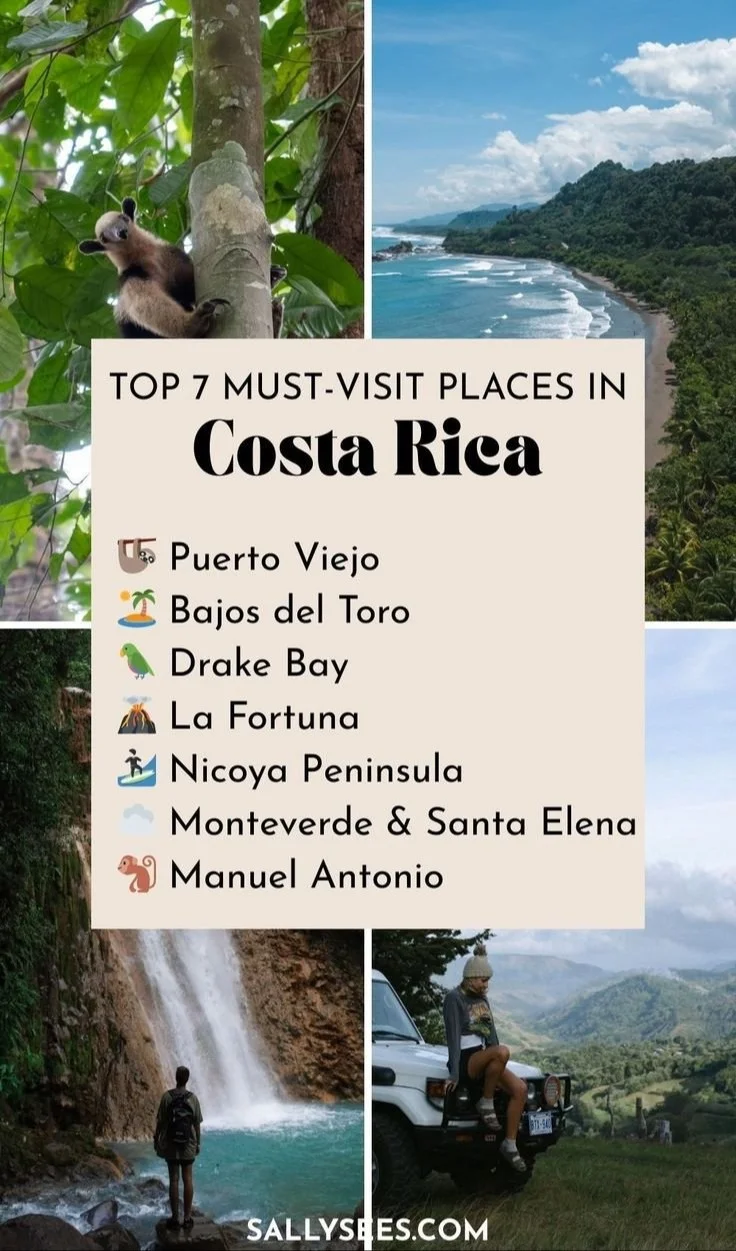
Costa Rica is a compact country packed with biodiversity, active volcanoes, lush rainforests, cloud forests, and Pacific and Caribbean coastlines — ideal for first-time and repeat travelers alike. Whether you want zip-lining through the canopy, surfing uncrowded breaks, or spotting toucans and sloths, solid planning makes the most of your trip. For tips on stretching your budget while still enjoying adventure activities, consult this helpful budget and adventure travel guide before you finalize plans.Getting Ready: When to Go and Entry Requirements
Best time to visit: Dry season (December–April) for sun and easy trekking; green season (May–November) for fewer crowds, lower rates, and lush landscapes.
Entry rules: Most visitors need a passport valid at least six months from arrival and a return or onward ticket; check visa rules for your nationality before departure.
Health: Routine vaccinations are usually sufficient; vaccine and mosquito-bite precautions are recommended for some areas. Bring basic meds and motion-sickness remedies if you plan river trips.
How to Get There and Around
International flights: Juan Santamaría (SJO) near San José and Daniel Oduber (LIR) in Liberia are the main airports.
Domestic travel: Short-haul flights save time for island or distant region travel. Buses are affordable and extensive; rental cars give flexibility but watch for narrow or unpaved roads in rural areas.
Driving tips: 4x4s are useful for rainy-season travel and remote access. Drive defensively, obey local laws, and factor in slower speeds on mountain roads.
Where to Go: Regions and Highlights
Arenal / La Fortuna: Hot springs, Arenal Volcano views, waterfalls, and abundant adventure operators offering canopy tours and rafting.
Monteverde Cloud Forest: Premier birding and hiking; best for quetzal sightings and serene cloud-forest walks.
Manuel Antonio: Compact national park with beaches, hiking trails, and approachable wildlife viewing near coastal amenities.
Nicoya Peninsula: Surf towns (Santa Teresa, Nosara), yoga retreats, and some of the country’s Blue Zones.
Osa Peninsula / Corcovado: Remote rainforest, exceptional biodiversity, and unparalleled wildlife for more adventurous travelers.
Top Activities and Adventures
Wildlife watching: Dawn and dusk are prime for spotting monkeys, sloths, and birds. Hire local naturalist guides for better success.
Surfing: Pacific coast offers waves for beginners to experts; many surf schools and board rentals at main beaches.
Rainforest canopy: Zip lines and hanging bridges provide thrilling views and unique perspectives on rainforest ecology.
Water adventures: Whitewater rafting and sea kayaking are widely available with varying difficulty levels.
Relaxation: Natural hot springs, beachfront lodges, and wellness retreats are plentiful for low-key rest days.
Sample Itineraries (by length)
5 days: San José → La Fortuna (Arenal) 2–3 days → Monteverde 1–2 days → return.
10 days: San José → Arenal → Monteverde → Pacific coast (Manuel Antonio or Nicoya) → relax and surf.
2 weeks: Include Osa Peninsula/Corcovado for a deeper rainforest immersion; combine with a coastal escape.
Budgeting and Money
Costs vary widely: budget travelers can get by with hostels and public transport; mid-range travelers use boutique lodges and car rentals.
ATMs: Widely available in cities and tourist hubs; carry some cash when visiting remote areas.
Tipping: Not mandatory but appreciated — 10% in restaurants if service charge isn’t included; small tips for guides and drivers.
Safety and Practical Tips
Natural hazards: Be aware of rip currents on beaches, aggressive weather in rainy months, and uneven forest trails.
Personal safety: Costa Rica is relatively safe, but standard precautions against petty theft (watch belongings, lock your rental car) apply.
Sustainable travel: Respect protected areas, avoid single-use plastics, and support local businesses and community-run tours.
Packing Checklist
Lightweight rain jacket, quick-dry clothing, sturdy hiking shoes, reef-safe sunscreen, insect repellent, reusable water bottle, and a good pair of binoculars for birding.
Electrical: 110V outlets with types A/B plugs; bring adapters if necessary.
Responsible and Eco-Friendly Travel
Visit national parks with certified guides to reduce impact and learn about conservation efforts.
Choose lodges with sustainable practices (water-saving, waste reduction, local sourcing) to support ecological protection.
Final planning tips
Book popular lodges and excursions in high season well in advance.
Keep an eye on weather forecasts when arranging multi-day treks or boat transfers.
Learn basic Spanish phrases — locals appreciate the effort and it enhances interactions.
Conclusion
For detailed reviews to help you choose the best print and digital references, consider these Guidebook Recommendations for Costa Rica to guide your trip planning and on-the-ground decisions.
2026 Planning Update for Costa Rica
A stronger Costa Rica plan starts with intent. Decide whether the trip is about price, scenery, comfort, food, events, outdoor access or a specific bucket-list moment. That decision makes the rest of the planning easier because every hotel, transfer and activity can be judged against the same goal.
For 2026, travelers should also compare total trip cost instead of only headline prices. A cheap hotel can become expensive if transport is weak, while a slightly higher nightly rate can save money if it includes breakfast, transit access or a better location.
Budget and Booking Tips
Book refundable accommodation early, then keep comparing prices.
Check airport, train or bus access before choosing where to stay.
Plan one main paid experience per day instead of overloading the itinerary.
Use grocery stops, local transport and shoulder-season dates to control costs.
Keep a small buffer for weather, delays, luggage storage or last-minute transfers.
The most common mistake is planning from one viral photo or one cheap price. A useful itinerary checks distance, opening times, weather, local holidays, transfer costs and whether the experience still works if plans change.
Another mistake is ignoring the first and last day. Arrival and departure days often decide whether a trip feels smooth or stressful, so keep them lighter and avoid booking the most important activity immediately after a long transfer.
FAQ
How do you plan Costa Rica on a budget?
Start with flexible dates, compare accommodation outside the most expensive zone, check transport before booking and keep one paid activity as the main highlight.
What should you check before booking Costa Rica?
Check season, local transport, cancellation rules, official travel updates, safety requirements and whether the final cost includes food, transfers and extra fees.
Is Costa Rica worth it in 2026?
Yes, if the trip matches your budget, season and travel style. A focused itinerary usually gives better value than trying to visit too many places at once.
Costa Rica’s rainforests are a mosaic of wildlife, rushing rivers, and dramatic coastline — and 2025 is a great year to plan a deeper, more responsible jungle adventure. Whether you’re chasing rare bird calls, trekking to remote waterfalls, or paddling through mangrove tunnels, there’s a corner of the country that feels made for exploration. If you want waterfalls and lesser-known stops, check our 5 amazing off-the-beaten-path places to explore for extra inspiration before you go.
1. Osa Peninsula — Corcovado & Drake Bay
Why go: Often called “the most biologically intense place on Earth,” Corcovado National Park and nearby Drake Bay deliver Jaguars-on-the-horizon vibes, scarlet macaws, tapirs, and endless frog song. Trails range from day hikes to multi-day treks that cross rivers and coastal lowland forest.Highlights:
Guided rainforest treks in Corcovado for a shot at tapirs and anteaters.
Boat trips from Drake Bay to snorkel Caño Island Marine Reserve.
Night walks that reveal tree frogs, tarantulas, and other nocturnal life.
Travel tips: Access is typically by small plane or a combination of land and water taxi; book transfers ahead. Bring sturdy, quick-dry clothing and insect repellent that’s reef-safe for marine outings.
2. Monteverde Cloud Forest Reserve
Why go: For a mist-draped experience complete with hanging bridges, endemic orchids, and resplendent quetzals, Monteverde’s cloud forests are unmatched. Cooler temperatures make it comfortable for long walks and birdwatching.Highlights:
Early-morning birding tours to spot quetzals and trogons.
Canopy zip-line courses and hanging-bridge networks for a treetop perspective.
Reserve trails that reveal unique mosses, bromeliads, and fungi.
Travel tips: The cloud forest can be foggy — bring layers and a rain shell. Support local guides who focus on conservation and sustainable community projects.
3. Arenal / La Fortuna — Volcano, Waterfalls & Hot Springs
Why go: Arenal blends dramatic volcano views with waterfalls, hot springs, and a dense web of trails perfect for both adrenaline seekers and relaxation-seekers.Highlights:
Hike to La Fortuna Waterfall and cool off in its plunge pool.
Soak in natural hot springs fed by volcanic activity.
Try canyoning or white-water rafting on nearby rivers.
Travel tips: Check volcanic activity advisories (Arenal is generally stable for visitors). If you want to avoid crowds, opt for early-morning treks or midweek excursions.
4. Tortuguero National Park — Riverways & Sea Turtles
Why go: Tortuguero’s labyrinthine canals and protected beaches are prime for wildlife watching, especially sea turtles that nest here (season varies by species). The only practical way to reach Tortuguero is by boat or small plane, which adds to the sense of remoteness.Highlights:
Guided boat tours through canals to spot caimans, toucans, and monkeys.
Nighttime turtle-nesting walks (with licensed guides during nesting season).
Village visits to learn about Afro-Caribbean culture and conservation.
Travel tips: Choose licensed turtle tours to avoid disturbing nesting animals, and bring binoculars and waterproof gear for boat trips.
Why go: For a jungle-beach combo with Afro-Caribbean flavor, Cahuita National Park and the surrounding Puerto Viejo area offer snorkeling, laid-back surf towns, and rainforest trails that edge right up to the shore.Highlights:
Snorkel over coral gardens in Cahuita National Park.
Try Afro-Caribbean cuisine and local music in Puerto Viejo.
Short hikes through lowland rainforest where sloths and monkeys are common.
Travel tips: The Caribbean side has a different microclimate — expect more humidity and afternoon showers. Respect reef rules and use reef-safe sunscreen while snorkeling.
Practical Planning Tips for 2025
Best time to go: Dry season (December–April) offers easier trail conditions and clearer seas, while the “green” season (May–November) means fewer crowds, vibrant forest colors, and lower prices.
Health and safety: Bring insect repellent, a basic first-aid kit, and ensure routine vaccinations are up to date. Consider travel insurance that covers remote-area evacuations.
Gear essentials: Quick-dry clothing, waterproof daypack, good trail shoes, a headlamp for night walks, and a compact binocular for birding.
Responsible travel: Stick to trails, follow guide instructions, support local ecotour operators, and minimize single-use plastics to protect fragile ecosystems.
Conclusion
If you’re dreaming of deep jungle immersion, consider an organized itinerary like the Epic 6 Day Osa Jungle Adventure Tour with Sukia Travel for a guided, conservation-minded way to experience the Osa Peninsula’s highlights. With thoughtful planning and respect for local ecosystems, your 2025 Costa Rica jungle adventure can be unforgettable and sustainable.
2026 Planning Update for Jungle Adventures
A stronger Jungle Adventures plan starts with intent. Decide whether the trip is about price, scenery, comfort, food, events, outdoor access or a specific bucket-list moment. That decision makes the rest of the planning easier because every hotel, transfer and activity can be judged against the same goal.
For 2026, travelers should also compare total trip cost instead of only headline prices. A cheap hotel can become expensive if transport is weak, while a slightly higher nightly rate can save money if it includes breakfast, transit access or a better location.
Budget and Booking Tips
Book refundable accommodation early, then keep comparing prices.
Check airport, train or bus access before choosing where to stay.
Plan one main paid experience per day instead of overloading the itinerary.
Use grocery stops, local transport and shoulder-season dates to control costs.
Keep a small buffer for weather, delays, luggage storage or last-minute transfers.
The most common mistake is planning from one viral photo or one cheap price. A useful itinerary checks distance, opening times, weather, local holidays, transfer costs and whether the experience still works if plans change.
Another mistake is ignoring the first and last day. Arrival and departure days often decide whether a trip feels smooth or stressful, so keep them lighter and avoid booking the most important activity immediately after a long transfer.
FAQ
How do you plan Jungle Adventures on a budget?
Start with flexible dates, compare accommodation outside the most expensive zone, check transport before booking and keep one paid activity as the main highlight.
What should you check before booking Jungle Adventures?
Check season, local transport, cancellation rules, official travel updates, safety requirements and whether the final cost includes food, transfers and extra fees.
Is Jungle Adventures worth it in 2026?
Yes, if the trip matches your budget, season and travel style. A focused itinerary usually gives better value than trying to visit too many places at once.
Quick answer: Best Costa Rica is easiest to plan when you compare season, total trip cost, transport, where to stay and the main experience you want before booking.
Costa Rica is synonymous with lush rainforests, volcanic peaks and Pacific and Caribbean coastlines that beckon travelers seeking both adventure and indulgence. For those who want to combine pristine beaches with top-tier service, private villas, world-class dining and rejuvenating spas, Costa Rica’s luxury beach resorts offer the perfect escape. If you enjoy coastal escapes beyond Costa Rica, our Baja California beaches guide highlights other remarkable shorelines to inspire your next trip.Below are ten outstanding luxury beach resorts across Costa Rica, each selected for its location, amenities and unique character.
1. Andaz Costa Rica Resort at Peninsula Papagayo (Guanacaste)
Set on a private peninsula with multiple beaches and coves, Andaz blends contemporary design with eco-conscious practices. Guests love the infinity pools overlooking the Pacific, farm-to-table cuisine, and abundant wildlife sightings. Activities include snorkeling, sportfishing, and guided nature walks.Why go: Seamless integration of luxury and nature with easy access to both calm bays and offshore adventures.Tip: Book a sunset beachfront cabana for an unobstructed view and private service.
2. Four Seasons Resort Costa Rica at Peninsula Papagayo (Guanacaste)
A benchmark for high-end hospitality, Four Seasons offers expansive villas, a championship golf course, and exceptional family programs. The resort’s cliffside infinity pool and personalized excursions make it a favorite for couples and families alike.Why go: Impeccable service, privacy, and curated experiences such as private yacht charters.Tip: Reserve a guided snorkeling trip to nearby Catalina Islands for vibrant marine life.
3. Nayara Bungalows & Gardens (Arenal/La Fortuna)
While not directly on the beach, Nayara’s unforgettable luxury and proximity to Arenal Volcano make it an essential stop on many itineraries. Its terraced bungalows, private plunge pools and lush gardens create a secluded tropical sanctuary.Why go: Perfect for travelers who want to combine beach time elsewhere with volcanic hot springs and rainforest immersion.Tip: Splurge on a bungalow with a private garden and open-air shower for a romantic treat.
4. Tulemar Bungalows & Villas (Manuel Antonio)
Tucked into a gated estate overlooking Manuel Antonio National Park, Tulemar offers private villas and beachfront bungalows surrounded by wildlife. The property’s multiple pools, private trails and direct beach access make it feel like your own coastal hideaway.Why go: Exceptional privacy and direct access to some of Costa Rica’s most biodiverse coastal rainforest.Tip: Choose a villa with a rooftop deck for panoramic ocean and rainforest views.
Set on a pristine white-sand beach composed of crushed shells, Reserva Conchal pairs all-inclusive convenience with refined amenities, including a championship golf course and a full-service spa.Why go: Ideal for travelers who want the ease of an all-inclusive but still appreciate luxury touches and activities.Tip: Take an eco-tour to nearby estuaries to see nesting birds and mangrove ecosystems.
6. Lapa Rios Lodge (Osa Peninsula)
A luxury eco-lodge on a private nature reserve, Lapa Rios is an intimate celebration of biodiversity and sustainability. Bungalows perched above the forest offer immersive wildlife experiences and guided rainforest hikes.Why go: For travelers who prioritize conservation-minded luxury and remote beaches teeming with wildlife.Tip: Join a guided night walk to witness nocturnal species and the rainforest’s dynamic after-dark life.
7. Oxygen Jungle Villas (Playa Cielo, near Uvita)
Clinging to a coastal hillside in the Southern Pacific region, Oxygen Jungle Villas combine cliffside villas, private pools, and panoramic ocean views with immediate access to Marino Ballena National Park beaches.Why go: A boutique, highly romantic option perfect for honeymooners and couples seeking privacy with outdoor adventure nearby.Tip: Plan a whale-watching excursion in season (usually July–October and December–April).
8. The Springs Resort and Spa (Arenal/La Fortuna)
Another inland gem that complements beach stays, The Springs features luxurious suites and natural hot springs set against volcano vistas. Its high-end spa and adventure activities make it an indulgent base for relaxation and thrills.Why go: For a restorative interlude of thermal baths and spa treatments between coastal stops.Tip: Reserve a private hot spring suite for exclusive relaxation at any hour.
9. El Mangroove, Autograph Collection (Guanacaste)
Modern and stylish, El Mangroove offers a boutique-luxe experience on a quiet stretch of Gulf of Papagayo shoreline. Renowned for its contemporary design, surf-accessible beach and a lively food and beverage scene, it balances sophistication with laid-back charm.Why go: A fashionable resort with great surf access and contemporary culinary offerings.Tip: Rent a stand-up paddleboard at sunrise for calm waters and a serene start to the day.
10. Casa Chameleon at Las Catalinas (Guanacaste)
A small, adults-only resort perched above the Pacific, Casa Chameleon features private pools, minimalist villas and personalized service. Its location near the car-free village of Las Catalinas offers a tranquil seaside town experience.Why go: Best for couples seeking an intimate, design-focused retreat with easy access to charming local dining and beaches.Tip: Enjoy the complimentary wine and tapas hour offered by many villas for a romantic evening.
How to Choose the Right Resort
Prioritize what matters most: privacy, family-friendly amenities, spa services, or proximity to national parks.
Consider travel logistics: some remote luxury resorts require domestic flights or boat transfers.
Check the seasonality: Pacific coast and Caribbean coast have differing high seasons and wildlife viewing windows.
Book experiences early (private excursions, spa treatments, specialty dining) to secure preferred times.
Conclusion
For the most current traveler reviews, pricing and an updated roundup of top-rated luxury properties, consult this curated list of THE 10 BEST Costa Rica Luxury Resorts 2026 (with Prices) to compare amenities and find the resort that best fits your ideal Costa Rican beach escape.
2026 Planning Update for Best Costa Rica
A stronger Best Costa Rica plan starts with intent. Decide whether the trip is about price, scenery, comfort, food, events, outdoor access or a specific bucket-list moment. That decision makes the rest of the planning easier because every hotel, transfer and activity can be judged against the same goal.
For 2026, travelers should also compare total trip cost instead of only headline prices. A cheap hotel can become expensive if transport is weak, while a slightly higher nightly rate can save money if it includes breakfast, transit access or a better location.
Budget and Booking Tips
Book refundable accommodation early, then keep comparing prices.
Check airport, train or bus access before choosing where to stay.
Plan one main paid experience per day instead of overloading the itinerary.
Use grocery stops, local transport and shoulder-season dates to control costs.
Keep a small buffer for weather, delays, luggage storage or last-minute transfers.
The most common mistake is planning from one viral photo or one cheap price. A useful itinerary checks distance, opening times, weather, local holidays, transfer costs and whether the experience still works if plans change.
Another mistake is ignoring the first and last day. Arrival and departure days often decide whether a trip feels smooth or stressful, so keep them lighter and avoid booking the most important activity immediately after a long transfer.
FAQ
How do you plan Best Costa Rica on a budget?
Start with flexible dates, compare accommodation outside the most expensive zone, check transport before booking and keep one paid activity as the main highlight.
What should you check before booking Best Costa Rica?
Check season, local transport, cancellation rules, official travel updates, safety requirements and whether the final cost includes food, transfers and extra fees.
Is Best Costa Rica worth it in 2026?
Yes, if the trip matches your budget, season and travel style. A focused itinerary usually gives better value than trying to visit too many places at once.
Argentina is one of those countries that seems to contain a whole continent of landscapes: explosive waterfalls, jagged glaciers, wind-swept steppe, high-altitude salt flats and lively cities. Below I share a curated list of the 12 most scenic places I visited during extended trips to Patagonia and Iguazú, with short tips on what to see and when to go. For a comparison with other bucket-list destinations, see the 10 best places to visit in Mexico to get ideas for combining varied Latin American highlights into one extended trip.
1. Buenos Aires — Color, tango and architecture
Why go: Elegant boulevards, neoclassical buildings in Recoleta, colorful houses of La Boca and an unbeatable café culture.
Highlights: Plaza de Mayo, Palermo parks, San Telmo markets, tango shows in the evening.
Best time: Spring (Sept–Nov) and autumn (Mar–May) for mild weather and fewer crowds.
Tip: Walk rather than drive—many gems show up between main plazas.
2. Iguazú Falls — Immense, thunderous waterfalls
Why go: One of the world’s most dramatic waterfall systems, where walkways bring you to the mist and roar of the falls.
Highlights: Devil’s Throat (Garganta del Diablo) viewpoint, boat rides under the cascades.
Best time: Year-round, but high water from Dec–Mar increases spectacle; shoulder seasons are less humid.
Tip: Spend a full day on the Argentine side and a half-day on the Brazilian side for panoramic views.
3. Perito Moreno Glacier (El Calafate) — Ice up close
Why go: A massive, advancing glacier you can approach on walkways or by boat—and watch dramatic calving.
Highlights: Glacier trekking options and timed viewpoints for calving.
Best time: Oct–Mar for longer daylight and milder temps.
Tip: Book a guided mini-trek on the glacier if you want a hands-on ice experience.
4. El Chaltén & Mount Fitz Roy — Trekker’s paradise
Why go: Towering granite peaks, alpine lakes and some of Argentina’s best day hikes.
Highlights: Laguna de los Tres for Fitz Roy, Laguna Torre at sunrise.
Best time: Nov–Mar for hiking conditions; be prepared for rapidly changing weather.
Tip: Stay a few days and mix short hikes with a longer full-day route.
5. Ushuaia & Tierra del Fuego — The end of the world
Why go: Rugged fjords, subpolar forests and maritime wildlife where the Andes meet the Southern Ocean.
Highlights: Tierra del Fuego National Park, Beagle Channel boat trips, penguin colonies.
Best time: Nov–Mar for peak season and accessible trails.
Tip: Layer up—wind and sudden cold snaps are common even in summer.
6. Bariloche & the Lake District — Alpine lakes and forests
Why go: Glacier-fed lakes framed by mountains, chocolate shops and excellent hiking.
Highlights: Circuito Chico drive, Cerro Campanario viewpoint, summer kayaking or winter skiing.
Best time: Dec–Mar for hiking and water activities; Jun–Aug for skiing.
Tip: Rent a car to explore the scenic roads and hidden beaches around the lakes.
7. Península Valdés — Marine wildlife capital
Why go: Whale watching, sea lion colonies, elephant seals and orcas (in seasonal conditions).
Highlights: Whale-watching cruises from Puerto Pirámides, Punta Norte for sea lion watching.
Best time: Jun–Dec for Southern Right Whales; other species are seasonal.
Tip: Respect wildlife distances; guided tours give the best chance to spot animals safely.
8. Mendoza & Aconcagua foothills — Vineyards with mountain views
Why go: World-class Malbec, sun-soaked vineyards and close-up views of the Andes.
Highlights: Wine tastings, Aconcagua Provincial Park day trips, scenic cycling through vineyards.
Best time: Mar–May (harvest season) for wine festivals and warm days.
Tip: Combine tastings with a day hike or a hot-air balloon ride for panoramic views.
9. Quebrada de Humahuaca — Colorful canyon and Andean culture
Why go: A UNESCO-listed gorge with rainbow-hued hills, colonial villages and living indigenous traditions.
Highlights: Purmamarca’s Cerro de los Siete Colores, Tilcara’s ruins, colorful local markets.
Best time: Apr–Nov for dry, clear skies and comfortable daytime temperatures.
Tip: Acclimatize slowly if you’re coming from low altitudes—some towns sit above 2,500 m.
10. Salinas Grandes & Jujuy highlands — Surreal salt plains
Why go: Vast, reflective salt flats that make for otherworldly photos and high-altitude desert landscapes.
Highlights: The mirror-like expanse of Salinas Grandes and bright local textile markets in Jujuy.
Best time: Dry season (May–Nov) for accessibility and crisp skies.
Tip: Bring sun protection and warm layers; UV and temperature swings are extreme.
11. Esteros del Iberá — Birdwatcher and wildlife refuge
Why go: One of South America’s largest wetlands—ideal for spotting capybaras, caimans, marsh deer and many birds.
Highlights: Boat safaris through reed channels, guided nighttime wildlife spotting.
Best time: Apr–Oct for lower water and easier trails; wildlife-viewing is strong year-round.
Tip: Stay in eco-lodges to support conservation and for guided excursions that maximize sightings.
12. Ruta de los Siete Lagos — Scenic lakes route
Why go: A short but spectacular drive connecting Bariloche and San Martín de los Andes through forested mountains and turquoise lakes.
Highlights: Stop at viewpoints, swim in clear mountain lakes, picnic at hidden coves.
Best time: Dec–Mar for warm weather and forest blooms.
Tip: Start early to avoid peak tourist traffic and take your time—there are great viewpoints off the main road.
Practical tips for planning
Getting around: Domestic flights connect hubs (Buenos Aires, Bariloche, El Calafate, Ushuaia, Iguazú), but renting a car gives flexibility in the Lake District and northern provinces.
Packing: Layering is essential—Patagonia can be windy and cold even in summer, while the north is hot and dry.
Time: If you have only two weeks, choose one region (Patagonia or the north/center); with 3–4 weeks you can combine Buenos Aires, Iguazú and a Patagonian circuit.
Booking: Peak months vary by region—book accommodations and key tours (glacier treks, whale-watching) well in advance.
2026 Planning Update for Argentina To Visit In 2026
A stronger Argentina to Visit in 2026 plan starts with intent. Decide whether the trip is about price, scenery, comfort, food, events, outdoor access or a specific bucket-list moment. That decision makes the rest of the planning easier because every hotel, transfer and activity can be judged against the same goal.
For 2026, travelers should also compare total trip cost instead of only headline prices. A cheap hotel can become expensive if transport is weak, while a slightly higher nightly rate can save money if it includes breakfast, transit access or a better location.
Budget and Booking Tips
Book refundable accommodation early, then keep comparing prices.
Check airport, train or bus access before choosing where to stay.
Plan one main paid experience per day instead of overloading the itinerary.
Use grocery stops, local transport and shoulder-season dates to control costs.
Keep a small buffer for weather, delays, luggage storage or last-minute transfers.
The most common mistake is planning from one viral photo or one cheap price. A useful itinerary checks distance, opening times, weather, local holidays, transfer costs and whether the experience still works if plans change.
Another mistake is ignoring the first and last day. Arrival and departure days often decide whether a trip feels smooth or stressful, so keep them lighter and avoid booking the most important activity immediately after a long transfer.
FAQ
How do you plan Argentina to Visit in 2026 on a budget?
Start with flexible dates, compare accommodation outside the most expensive zone, check transport before booking and keep one paid activity as the main highlight.
What should you check before booking Argentina to Visit in 2026?
Check season, local transport, cancellation rules, official travel updates, safety requirements and whether the final cost includes food, transfers and extra fees.
Is Argentina to Visit in 2026 worth it in 2026?
Yes, if the trip matches your budget, season and travel style. A focused itinerary usually gives better value than trying to visit too many places at once.
Quick answer: Travel is easiest to plan when you compare season, total trip cost, transport, where to stay and the main experience you want before booking.
You’ve probably spent years maybe decades perfecting the art of the itinerary. Color-coded spreadsheets. Restaurant reservations made three months in advance. Museum hours memorized. That spreadsheet. I mentioned that already, didn’t I? Anyway, you return home feeling like you’ve ticked boxes rather than lived. Like you were a tourist version of a robot. But here’s what nobody tells you what if the secret to actually enjoying travel has nothing to do with finding better destinations or booking those luxury accommodations everyone keeps posting about on Instagram?
What if it’s actually about doing the opposite? Like, completely opposite.
The real game-changer and I’m genuinely surprised more people haven’t figured this out is something called slow travel. It’s been hiding right there the whole time while you’ve been running around like a headless chicken trying to cram Bangkok, Chiang Mai, and Phuket into a two-week sprint.
Most travelers are operating under this scarcity mindset. Right? We think: more destinations equals better vacation. We’ve bought into this lie that if we’re not moving, we’re wasting time. It’s like being on a treadmill—constantly running but somehow never arriving anywhere meaningful. The travel industry loves this. Airlines, tour operators, those Instagram influencers with the perfect skin and impossibly white teeth they all profit from your anxiety. Your FOMO. Your desperate need to see everything before you die.
Why Nobody’s Talking About This (Spoiler: Money)
1. The Entire System Profits From Your Rushing Around
Think about it. The whole machine it’s designed for speed. Ten countries in fourteen days. Cheap flights that encourage constant movement. Hotels positioned strategically to minimize “wasted” travel time between attractions. Even the content creators, they’re optimizing for novelty, for the dopamine hit of “new destination every week.”
I stayed in Rome for three weeks once. Three weeks! My friends thought I’d lost my mind. They were doing Europe in a month and I was just… sitting in the same coffee bar on Via della Consolazione, ordering the same cappuccino, watching the same old man feed pigeons. And you know what? That trip changed something fundamental in me. Not because Rome is special (though it is), but because I slowed down. I stopped consuming and started absorbing.
But would the travel industry promote this? Would they tell you to book fewer flights, visit fewer places, spend less money? No. They wouldn’t. They can’t. Their business model depends on your constant movement, your perpetual hunger for the next thing.
Here’s a question that might sting a little: How many cities have you “visited” where you only saw the tourist corridor? Like, actually only the places designed for people like you and me?
2. Our Brains Are Wired Against Stillness (And They Know It)
Humans—we’re addicted to novelty. Our dopamine receptors light up at new experiences. The travel industry understands neuroscience better than most neuroscientists. They weaponize this against us. Slow travel requires something genuinely terrifying: choosing to stay put. Abandoning places you haven’t seen yet.
This feels like failure. Like you’re missing out on something crucial.
But—and this is important—the moment you accept that you literally cannot see everything? That’s when liberation happens. Not the Instagram kind. The real kind. The kind that sits in your chest.
I remember this moment (I can see it so clearly even now): I was in a small town in southern Portugal, population maybe five thousand, and I realized I could stay for a year and still have streets I hadn’t walked down. And instead of panicking, I felt… relieved? Is that the word? Like I’d been released from an obligation.
Would you rather have a selfie with the Eiffel Tower during a frantic 36-hour Paris sprint, or spend three weeks learning to make croissants from a grumpy French baker who grudgingly tolerates your terrible accent? Which memory hits differently ten years later?
3. Unstructured Time Terrifies Us And That’s Exactly Where the Magic Lives
Slow travel demands something most of us have trained ourselves to fear: boredom. Empty hours. A rainy afternoon with nothing scheduled, nowhere to be. Our phones scream at us that this is wasted time, that we should be optimizing, that every moment should be documented and transformed into content.
But in those quiet moments? That’s where things actually happen.
When you sit for five hours in a town square with zero agenda, something shifts. You overhear conversations in languages you don’t understand but somehow comprehend emotionally. You meet an old woman (there’s always an old woman in these stories, isn’t there?) selling flowers, and she invites you to her daughter’s wedding next week. The restaurant you stumble into randomly serves something life-changing. Maybe it’s literally just pasta, but the way the sun hits it through the window, the way the owner’s daughter laughs these details become the story.
The structured tourism industry? They can’t monetize this. They can’t sell “sit around and feel things.” They need you uncomfortable with unstructured time so you keep buying their solutions their tours, their experiences, their pre-packaged moments.
What if you just… stopped buying? What if you leaned into the uncertainty instead of resisting it?
4. The Secret Economics Nobody Advertises
Here’s something wild that nobody talks about: slow travel is often cheaper. Like, significantly cheaper.
When you stay longer in one place, you stop eating at restaurants designed for tourists and start eating where actual people eat. You negotiate monthly rental discounts. Your transportation costs plummet because you’re not constantly moving between cities. You develop relationships genuine ones with shop owners who give you real prices, not tourist markups.
But these savings? They’re invisible. They don’t generate engagement. You can’t post a photo of money you didn’t spend. The luxury resort, the helicopter tour those are Instagram moments. The actual financial wisdom of slow travel sits quietly in the background, unglamorous and unsexy.
The travel industry has zero incentive to promote this. They can’t make money off what you don’t consume. It’s almost elegant in how effective their silence has been.
5. You’re Actually Missing Nothing
I need to say this clearly: the Eiffel Tower will still be there. The temples won’t collapse. The beaches aren’t going anywhere. This isn’t scarcity. This is abundance disguised as scarcity.
The real scarcity? It’s depth. It’s understanding. It’s the ability to sit with a place long enough that it starts to reveal itself to you not the curated version, but the actual living, breathing thing.
How to Actually Do This (The Practical Stuff)
Start absurdly small. Don’t plan a six-month sabbatical (though if you can, do it). Choose your next trip by selecting one region—not one country, one region and commit to staying there for at least four weeks. Maybe even six. Maybe even two months if you’re feeling adventurous.
Book a short-term apartment instead of hotel-hopping. This matters more than you think. You’ll have a kitchen. You’ll go to the market like a regular person. You’ll have a favorite coffee place where the barista eventually stops charging tourist prices.
Give yourself explicit permission to do nothing of “touristic value.” Spend an entire day reading on a bench. Go back to the same restaurant five times. Learn the names of shopkeepers. Let boredom find you and see what it wants.
Silence that voice you know the one that says you’re missing out. Every deep hour spent in one place is an hour you’re not wasting in three places superficially. You’re not collecting experiences like Pokemon cards. You’re actually experiencing something.
(Also, and I can’t stress this enough, delete the travel app that shows you all the things you could be doing elsewhere. Just delete it.)
An Invitation That Might Change Something
The world’s going to keep spinning. The Instagram-famous temples, the trending beaches, that restaurant everyone’s talking about—it’ll all still be there. Probably forever. But the opportunity to actually slow down? The chance to let a place change you instead of you just consuming it?
That’s fragile. That’s endangered.
Here’s what I’m genuinely asking you to consider: Will you have the courage to travel in a way that contradicts everything you’ve been taught? Your friends will judge you. They’ll come back with their lists of seventeen countries and you’ll return with stories about one small town and the woman who ran the bakery and how you learned to order coffee in her language, finally, after three weeks of trying.
Whose vacation sounds more interesting to you, honestly?
The person who’s visited the most countries isn’t the most well-traveled. It’s the person who stopped rushing. The one who stayed long enough to be changed by it.
Your next great adventure doesn’t begin when you book the most destinations. It begins when you finally have the audacity to slow down.
2026 Planning Update for Travel
A stronger travel plan starts with intent. Decide whether the trip is about price, scenery, comfort, food, events, outdoor access or a specific bucket-list moment. That decision makes the rest of the planning easier because every hotel, transfer and activity can be judged against the same goal.
For 2026, travelers should also compare total trip cost instead of only headline prices. A cheap hotel can become expensive if transport is weak, while a slightly higher nightly rate can save money if it includes breakfast, transit access or a better location.
Budget and Booking Tips
Book refundable accommodation early, then keep comparing prices.
Check airport, train or bus access before choosing where to stay.
Plan one main paid experience per day instead of overloading the itinerary.
Use grocery stops, local transport and shoulder-season dates to control costs.
Keep a small buffer for weather, delays, luggage storage or last-minute transfers.
The most common mistake is planning from one viral photo or one cheap price. A useful itinerary checks distance, opening times, weather, local holidays, transfer costs and whether the experience still works if plans change.
Another mistake is ignoring the first and last day. Arrival and departure days often decide whether a trip feels smooth or stressful, so keep them lighter and avoid booking the most important activity immediately after a long transfer.
FAQ
How do you plan travel on a budget?
Start with flexible dates, compare accommodation outside the most expensive zone, check transport before booking and keep one paid activity as the main highlight.
What should you check before booking travel?
Check season, local transport, cancellation rules, official travel updates, safety requirements and whether the final cost includes food, transfers and extra fees.
Is travel worth it in 2026?
Yes, if the trip matches your budget, season and travel style. A focused itinerary usually gives better value than trying to visit too many places at once.
Picture this: You wake up to the soft rustle of palm trees, the sun peeking over a shimmering lagoon of turquoise, teal, and sapphire hues. No crowds, no honking taxis, just you and nature whispering secrets through a breeze. That’s for you.
If you’re craving a quiet escape far from the chaos of tourist-heavy Mexico, feels like it was designed with you in mind. Not only is it postcard-perfect, but it also offers raw beauty, rich history, and a sense of peace you didn’t know you needed.
Where Exactly ?
You’ll find Quintana Roo, southern Mexico, near the border with Belize. It’s about a 5-hour drive from Cancun or just 30 minutes from Chetumal Airport.
State: Quintana Roo
Closest Airport: Chetumal International Airport (CTM)
Coordinates: 18.6765° N, 88.3973° W
What Makes Bacalar So Special?
Unlike beach destinations overrun with all-inclusive resorts, Bacalar offers untouched beauty. You won’t find high-rise hotels or wild nightlife here. Instead, you get:
The stunning Lagoon of Seven Colors
Ancient history dating back to the Mayans
A relaxed, eco-friendly lifestyle
Authentic Mexican culture
The Lagoon of Seven Colors
What Causes the Magical Shades of Blue?
The name isn’t poetic fluff. The lagoon genuinely flaunts seven dazzling shades of blue. This natural phenomenon occurs due to varying depths, white limestone bottom, and how sunlight filters through the water.
Best Times to See the Lagoon’s Colors
Morning Light: Perfect for clear, calm reflections
Late Afternoon: Richer, deeper hues
Avoid Rainy Season: June to October may dull the vibrancy
The History
Ancient Mayan Influence
roots stretch deep into Mayan history. The original name, Sian Ka’an Bakhalal, means “place surrounded by reeds.” The area was once a vital trade route linking the coast to the interior of the Yucatan.
The Fort of San Felipe
This colonial fort, built in 1729, stands as a reminder of pirate invasions. Today, it houses a museum where you can soak up stories of treasure, trade, and turmoil.
Top Things to Do
Kayaking & Paddleboarding
There’s something magical about gliding across still waters at sunrise. Rentals are available along the lagoon’s edge and many boutique hotels offer them for free.
Cenote Azul
One of the deepest cenotes in the Yucatan Peninsula, Cenote Azul plunges over 90 meters deep. It’s perfect for swimming, diving, or even just relaxing with lunch nearby.
Sailing into Sunset
Want romance? A sailing tour at golden hour is pure bliss. Watch the sun dip behind mangroves while sipping fresh coconut water.
Exploring the Stromatolites: Living Fossils
These ancient microorganisms, dating back over 3.5 billion years, are visible in Bacalar’s lagoon. They’re responsible for oxygenating Earth’s early atmosphere. Respect their space—swimming near them is prohibited to prevent damage.
Eco-Tourism and Sustainability
prides itself on being low-impact. From biodegradable toiletries to solar-powered stays, the locals work hard to preserve their paradise.
Say no to sunscreens with chemicals
Choose eco-friendly accommodations
Support local guides and artisans
Best Places to Eat
Local Dishes You Can’t Miss
Panuchos – Fried tortillas stuffed with beans and topped with shredded turkey
Tikin Xic – Grilled fish marinated in achiote
Cochinita Pibil – Slow-roasted pork wrapped in banana leaves
Vegan and Healthy Options
Mango y Chile: Vegan burgers and smoothies
El Manatí: Organic dishes served in a dreamy garden setting
La Playita: Overlooking the lagoon with plenty of vegetarian options
Where to Stay
Boutique Hotels vs Eco-Resorts
Boutique: Casa Bakal, Hotel Carolina
Eco-Friendly: Akalki, Habitas
Budget-Friendly Hostels
Yak Lake House
The Green Monkey Hostel
Casa Lahar
How to Get
By Air: Fly into Chetumal, then taxi or ADO bus
By Bus: ADO connects Bacalar to Cancun, Tulum, and Playa del Carmen
By Car: Renting a car gives you the freedom to explore cenotes and nearby villages
Is Bacalar Safe for Travelers?
Yes. It’s one of Mexico’s quieter, safer towns. That said, always:
Speak some Spanish—even basic phrases go a long way
Bring water shoes—the limestone bottom can be slippery
Bacalar vs Tulum vs Cancun
Feature
Bacalar
Tulum
Cancun
Crowds
Low
Medium to High
Very High
Nightlife
Minimal
Vibrant
Intense
Nature
Pristine lagoon
Beach + Cenotes
Beach + Resorts
Budget
Affordable
Mid-range
Expensive
Vibe
Laid-back
Boho-chic
Party-centric
Conclusion
If you’re looking to unplug, reset, and truly feel a place, Bacalar will give you that and more. This magical lagoon town invites you to slow down, soak in the sun, and connect with nature in a way few destinations can offer. It’s a slice of paradise that, once discovered, becomes a part of you.
So pack your bags, leave your stress behind, and let Bacalar’s serene waters show you what peace really feels like.
FAQs about
1. What’s the best time to visit ?
You’ll want to visit from November to May for dry weather and vivid lagoon colors.
2. Can you swim Lagoon?
Absolutely! Just avoid areas near stromatolites and always use eco-friendly sunscreen.
3. Is Bacalar good for families?
Yes, it’s safe, calm, and offers nature-centric activities perfect for all ages.
4. Are there ATMs in Bacalar?
Yes, but bring cash. Some businesses only accept pesos and card machines may be down.
5. How many days should you stay ?
Plan for at least 3 days to unwind and fully experience the lagoon and surroundings.
Imagine wandering along the lush banks of a jungle river in Quintana Roo, Mexico. The tropical heat is softened by the whisper of leaves and the cool spray of rushing water. Then, suddenly you see it. An imposing, timeworn Mayan sculpture emerging from the earth like a silent guardian of ancient secrets. This isn’t a scene from a dream or an Indiana Jones movie. It’s real, and it’s waiting for you.
If you’re planning your next adventure, this is your sign to explore more than beaches and resorts. You’re about to uncover a relic that merges art, history, and mystery like nowhere else.
Why This Sculpture is More Than Just Stone
The Mayans didn’t just leave behind temples. They left stories carved in stone, and this sculpture is one of them. Nestled beside a river that still flows with life, this stone figure is believed to represent a powerful deity, possibly connected to water and fertility—elements deeply revered in Mayan cosmology.
An Echo from the Ancient Mayan World
This isn’t just a carved rock. It’s a spiritual monument that has weathered centuries, connecting you to an era where nature and the divine were one.
Where to Find This Masterpiece
Hidden in the Heart of Quintana Roo
Located away from tourist-heavy zones, this sculpture rests beside a serene riverbank in southern Quintana Roo. Though the exact location is kept discreet to preserve its sanctity, you’ll likely need a guide from a local village or archaeological group to find it.
Closest Town: Felipe Carrillo Puerto
Nearest Landmark: Sian Ka’an Biosphere Reserve
Ideal Visiting Time: Early morning or sunset for the most dramatic lighting
The Artistic Brilliance Behind the Carving
A Testament to Mayan Engineering
You’ll notice intricate patterns—swirls symbolizing water, jaguar motifs representing strength, and celestial markings tracing lunar cycles. This was no random creation. It took mathematical knowledge, spiritual insight, and artistic talent to bring it to life.
Materials and Tools Used
Hand-carved limestone
Primitive yet precise chisels
Techniques passed down through generations
These elements showcase how the Mayans transformed their spiritual beliefs into enduring art.
The Symbolism Encoded in Stone
A Closer Look at What the Sculpture Represents
When you examine the sculpture up close, the iconography becomes clear:
Water Flow Patterns: Symbolizing abundance and life
Open Palms: Representing offerings to the gods
Serpent Figures: Signifying transformation and rebirth
Feline Eyes: Believed to channel night vision and divine sight
You’re not just seeing a statue—you’re witnessing the entire Mayan worldview embedded in stone.
How the Sculpture Was Discovered
Unearthed by Locals
It wasn’t a government expedition that discovered this sculpture—it was a farmer searching for a lost goat. Local villagers worked with researchers to identify its importance. This grassroots effort highlights how much hidden history remains buried just beneath the surface in Quintana Roo.
Why It Matters in Today’s World
A Bridge Between Past and Present
As someone who values cultural travel, seeing this sculpture gives you a unique opportunity. You’re walking the same ground as Mayan priests and artisans. You’re part of an unbroken thread of human curiosity and reverence.
In an era of disposable experiences, this moment anchors you in something timeless.
How to Visit Respectfully
Travel Tips for Conscious Tourists
You’re not just a visitor—you’re a guest. Here’s how to show respect:
Hire Local Guides: They know the area and deserve the support
Don’t Touch the Sculpture: Oils from your hands can damage it
Avoid Littering: Nature and culture coexist here—don’t ruin either
Ask Before Photographing Locals or Sacred Areas
Other Nearby Attractions Worth Exploring
Why stop at one discovery when there’s more?
Recommended Add-Ons to Your Trip
Sian Ka’an Biosphere Reserve: A UNESCO World Heritage site
Punta Allen: Perfect for birdwatching and kayaking
Mayan Villages: Authentic food, crafts, and storytelling
Hidden Cenotes: Ideal for a cool swim after your trek
What to Pack for the Journey
Here’s a checklist to keep you ready for this rugged yet rewarding trek:
You’ll want to plan smart to make the most of your visit:
Dry Season (Nov–Apr): Easier travel, clearer skies
Weekdays: Fewer visitors, more peaceful experience
Early Morning: Soft lighting for photos, cooler temps
Connecting with Local Communities
The Power of Human Connection
Talking to local villagers will deepen your experience. Many of them are descendants of the original Mayan civilization. Their stories breathe life into the stones. Take time to listen—you’ll walk away with more than just pictures.
The Spiritual Side of the Sculpture
For the Mayans, this sculpture was more than decorative—it was sacred.
Modern Ceremonies Still Occur
You might witness:
Offerings of flowers and corn
Burning of copal (tree resin) incense
Chants and prayers in the Mayan language
These rituals continue to nourish the spiritual energy of the site. You’re not just seeing history—you’re stepping into a living tradition.
Preserving the Sculpture for Future Generations
What You Can Do
Support Conservation Projects: Many NGOs work to protect these treasures
Share Your Experience: Inspire others to travel respectfully
Educate Yourself: Understanding the context makes your visit more meaningful
Every choice you make contributes to keeping this marvel intact.
Conclusion: Your Journey to the Heart of the Mayan Spirit
You’ve just explored more than an ancient sculpture—you’ve touched a piece of timeless human expression. This riverbank treasure in Quintana Roo isn’t just an Instagram post. It’s a portal into a world where myth, art, and nature intersect.
Now it’s your turn. Go beyond the beach. Chase the whispers of ancient rivers. Stand before that stone giant and feel the heartbeat of the Maya.
FAQs
1. Where exactly is the sculpture located in Quintana Roo?
The sculpture is situated near a secluded riverbank outside Felipe Carrillo Puerto. Exact coordinates are typically shared by local guides to protect the site.
2. Is the area safe for solo travelers?
Yes, especially with a local guide. It’s always best to travel in daylight and inform someone of your plans.
3. Are there guided tours available?
Absolutely. Local communities often provide eco-tours that include visits to the sculpture, nearby cenotes, and cultural experiences.
4. What’s the cultural significance of the sculpture?
It represents a Mayan deity connected to water and fertility, showcasing the Mayans’ spiritual beliefs and intricate artistry.
5. Can I take photographs of the sculpture?
Yes, but always ask your guide first and avoid touching or climbing the sculpture to preserve its condition.
if(last){
var africa=last.cloneNode(true);
africa.href="https://www.cnctravel.com/category/africa/";
africa.textContent="Africa";
last.insertAdjacentElement("afterend",africa);
}
}document.querySelectorAll(".blog article,.archive article").forEach(function(card){
if(card.querySelector("img,.cnc-archive-fallback-image")) return;
var title=card.querySelector(".entry-title,h2,h3");
if(!title) return;
var image=document.createElement("span");
image.className="cnc-archive-fallback-image";
image.setAttribute("aria-hidden","true");
card.insertBefore(image, card.firstChild);
});
});
})();