10-Day France And Switzerland Itinerary For Must-See Destinations

10-day France and Switzerland itinerary showcasing top travel destinations.
Planning a 10-day trip that blends France’s culture and cuisine with Switzerland’s dramatic Alpine scenery is one of the most rewarding ways to experience Europe. This itinerary balances iconic cities, scenic train journeys, and mountain highlights so you can see the best without feeling rushed. If you travel solo and want extra confidence while planning, you might also find useful perspectives on discover the most welcoming and secure destinations for solo travelers in Mexico, which offers practical safety and accommodation ideas that translate well to international travel planning.

How to use this plan

  • Move at a steady pace: three nights in Paris lets you see the essentials; then cross into Switzerland for rail-centric sightseeing.
  • Travel primarily by train: high-speed TGV and Switzerland’s excellent rail network minimize transit stress.
  • Pack for variety: city shoes plus layers and a compact rain jacket for mountain weather.

Day 1–3: Paris — Classic highlights and neighborhood charm

Day 1: Arrive in Paris. Get settled, stroll along the Seine, and enjoy a relaxed evening in the Latin Quarter. Day 2: Morning at the Louvre or Musée d’Orsay, lunch near Saint-Germain, and an afternoon climb to Sacré-Cœur. Evening visit to the Eiffel Tower or a river cruise. Day 3: Day trip option to Versailles, or spend the day exploring Le Marais, boutique shopping, and sampling pâtisseries.Tips:
  • Buy museum tickets in advance to skip lines.
  • Use the metro for fast, inexpensive city travel.

Day 4: From Paris to Geneva (or Lyon stopover)

Take an early TGV to Geneva (about 3 hours) or stop briefly in Lyon if you prefer a gastronomic detour. In Geneva, walk the lakeside, see the Jet d’Eau, and explore the Old Town’s narrow streets.

Day 5: Geneva to Montreux — Lake Geneva and Chillon Castle

Morning along Lake Geneva’s promenades; midday train to Montreux. Spend the afternoon at Chillon Castle and enjoy sunset views from the lakeside promenade.

Day 6: Montreux to Zermatt — Alpine gateway

Ride the scenic train toward Zermatt (change at Visp). Zermatt is car-free and dominated by the Matterhorn’s silhouette. Evening: dine in a mountain-conscious, cozy restaurant.

Day 7: Zermatt — Gornergrat or Klein Matterhorn

Take the Gornergrat railway for panoramic Matterhorn views or ride the cable car up to Klein Matterhorn for high-alpine panoramas. Hiking, photography, and alpine museums round out the day.

Day 8: Zermatt to Interlaken — Lakes and dramatic passes

Travel toward Interlaken via scenic rail lines. Arrive in the afternoon and explore Interlaken’s twin-lake vistas, or take a short boat ride on Lake Thun or Lake Brienz.

Day 9: Jungfraujoch or Schilthorn day trip

Choose between Jungfraujoch (the “Top of Europe”) for glaciers and ice tunnels, or Schilthorn for panoramic peaks and a James Bond-themed restaurant. Both offer unforgettable alpine experiences.

Day 10: Lucerne and departure

Head to Lucerne for the final day: walk the Chapel Bridge, visit the old town, and ride the nearby Pilatus or Rigi cogwheel for last mountain views before departing from Zurich or returning to Geneva, depending on your flight.

Practical tips and budgeting

  • Transportation: Consider point-to-point TGV tickets for France and a Swiss Travel Pass for flexibility in Switzerland. Book international legs early for the best fares.
  • Accommodation: Mid-range hotels or well-located guesthouses give the best balance of cost and convenience; in mountain towns, book early in high season.
  • Time of year: Late spring to early autumn gives the most reliable alpine hiking weather; winter turns parts of this route into a ski-focused itinerary.
  • Money: Switzerland uses Swiss francs; many places take cards but carry some cash for mountain trains and small purchases.
  • Health & safety: Stay hydrated at altitude, allow a relaxed pace in mountains, and check local transport schedules in advance.

Suggested packing list

  • Comfortable walking shoes and one pair for light hikes
  • Layers and a warm, windproof jacket for mountain conditions
  • Universal adapter and portable charger
  • Lightweight daypack and reusable water bottle
  • Copies of travel documents and offline maps

Variations and extensions

  • Swap Montreux for Annecy if you’d like a French alpine town vibe.
  • Add a day in Lyon for world-class cuisine.
  • If you prefer slower travel, drop one city and spend extra nights in Zermatt or Lucerne to soak in the scenery.

Conclusion

This 10-day France and Switzerland route blends cultural highlights, historic sites, and alpine splendor with efficient rail travel—ideal for first-time visitors who want variety without constant transit stress. For feedback or alternative routing ideas from fellow travelers and itinerary enthusiasts, see this community discussion on 10 days France/Switzerland trip itinerary suggestion/feedback.

2026 Planning Update for Switzerland

A stronger Switzerland plan starts with intent. Decide whether the trip is about price, scenery, comfort, food, events, outdoor access or a specific bucket-list moment. That decision makes the rest of the planning easier because every hotel, transfer and activity can be judged against the same goal.

For 2026, travelers should also compare total trip cost instead of only headline prices. A cheap hotel can become expensive if transport is weak, while a slightly higher nightly rate can save money if it includes breakfast, transit access or a better location.

Budget and Booking Tips

  • Book refundable accommodation early, then keep comparing prices.
  • Check airport, train or bus access before choosing where to stay.
  • Plan one main paid experience per day instead of overloading the itinerary.
  • Use grocery stops, local transport and shoulder-season dates to control costs.
  • Keep a small buffer for weather, delays, luggage storage or last-minute transfers.

Internal Planning Links

Official Resource to Check

Before finalizing the trip, check an official resource for current rules, entry requirements, park access, event details or health guidance: U.S. State Department international travel information.

Common Mistakes to Avoid

The most common mistake is planning from one viral photo or one cheap price. A useful itinerary checks distance, opening times, weather, local holidays, transfer costs and whether the experience still works if plans change.

Another mistake is ignoring the first and last day. Arrival and departure days often decide whether a trip feels smooth or stressful, so keep them lighter and avoid booking the most important activity immediately after a long transfer.

FAQ

How do you plan Switzerland on a budget?

Start with flexible dates, compare accommodation outside the most expensive zone, check transport before booking and keep one paid activity as the main highlight.

What should you check before booking Switzerland?

Check season, local transport, cancellation rules, official travel updates, safety requirements and whether the final cost includes food, transfers and extra fees.

Is Switzerland worth it in 2026?

Yes, if the trip matches your budget, season and travel style. A focused itinerary usually gives better value than trying to visit too many places at once.

10 days in Italy Itinerary: 5 Dreamy Ideas for Your Italy Trip

10 days in Italy itinerary with dreamy travel ideas and tips
Italy in 10 days can be as relaxed or as whirlwind as you like. Below are five distinct, carefully paced itineraries — each built around a different theme so you can pick the experience that matches your mood: art and history, coastal bliss, alpine scenery, rural food and wine, or off-the-beaten-track South. If you’re considering pairing Italy with nearby Adriatic adventures, see this helpful summer yachting in Croatia for inspiration before you choose your route.

1) The Timeless Triangle: Rome → Florence → Venice (Best for first-timers)

Day plan
  • Days 1–3: Rome — Colosseum, Roman Forum, Vatican Museums, evening in Trastevere.
  • Days 4–6: Florence — Uffizi, Duomo climb, day trip to Pisa or a Chianti winery.
  • Days 7–10: Venice — St. Mark’s Square, Doge’s Palace, a vaporetto ride on the Grand Canal, and a day trip to Murano/Burano.
Pacing and tips
  • Use fast trains (Frecciarossa/Italo) between cities to maximize sightseeing time.
  • Book major museum timed-entry tickets in advance to avoid long lines.
  • Carry comfortable shoes: cobbles and staircases are everywhere.
Why it’s dreamy
  • A compact route that hits Italy’s most iconic art, history, and romantic canals — perfect if you want a classic taste of the country in just 10 days.

2) Sun, Sea, and Lemon Groves: Amalfi Coast & Capri (Best for coastal romance)

Day plan
  • Days 1–3: Naples — archaeology museum, pizza tasting, and a quick trip to Pompeii.
  • Days 4–7: Sorrento base with day trips to Positano and Amalfi.
  • Days 8–10: Capri — Blue Grotto, Anacapri chairlift, and coastal walks.
Pacing and tips
  • Ferries between ports are scenic and practical in high season; expect crowds in July–August.
  • Consider a rented scooter or local SITA buses for narrow coastal roads — driving is beautiful but challenging.
  • Stay hydrated and book boat tours to the grottos early in the morning for calmer seas.
Why it’s dreamy
  • Dramatic cliffs, lemon-scented air, and postcard-perfect villages make this itinerary ideal for couples and photographers.

3) Lakes, Mountains, and Alpine Air: Lake Como → Dolomites → Verona (Best for nature lovers)

Day plan
  • Days 1–3: Lake Como — Bellagio, villa gardens, leisurely boat cruises.
  • Days 4–7: Dolomites base (Ortisei or Cortina) — hiking, cable cars, and alpine panoramas.
  • Days 8–10: Verona — Roman arena, Juliet’s balcony, relaxed evenings in piazzas.
Pacing and tips
  • Rent a car for flexibility in the Dolomites and lakeside villages.
  • Pack layers: mountain weather can shift quickly even in summer.
  • Book mountain excursions and cable car tickets in advance during peak season.
Why it’s dreamy
  • Combines serene lake views with dramatic alpine scenery and a touch of Shakespearean charm.

4) Rustic Slow Travel: Tuscany Countryside & Piedmont Vineyards (Best for food and wine)

Day plan
  • Days 1–4: Florence base with short drives into Chianti for winery visits and truffle hunts.
  • Days 5–7: Val d’Orcia — Pienza, Montalcino, Montepulciano: hilltop towns and Brunello tastings.
  • Days 8–10: Piedmont (Alba area) — Barolo wine region, hazelnut specialties, and slower country living.
Pacing and tips
  • Book vineyard tours and tastings ahead of time; many are small and limited to reservations.
  • Choose agriturismo stays to enjoy home-cooked meals and local hospitality.
  • Consider a cooking class to take local techniques home.
Why it’s dreamy
  • Food-forward days, scenic drives between vineyards, and evenings under starlit skies make this a restorative, sensual trip.

5) Hidden South: Naples → Matera → Puglia (Best for explorers)

Day plan
  • Days 1–2: Naples — street food, local markets, and a fast train to the south.
  • Days 3–5: Matera — wander the sassi cave dwellings and enjoy unique boutique stays in converted grottoes.
  • Days 6–10: Puglia — Alberobello trulli houses, Polignano a Mare cliffs, and Lecce’s baroque architecture.
Pacing and tips
  • Southern Italy offers authentic culture with fewer tourists, but check train and bus schedules — some regional routes are infrequent.
  • Try local specialties: orecchiette pasta, burrata, and seafood straight from the Adriatic.
  • Renting a car in Puglia gives you access to remote beaches and smaller villages.
Why it’s dreamy
  • A chance to discover lesser-known wonders, traditional cuisine, and landscapes that feel untouched by mass tourism.

Practical planning tips for any 10-day Italy trip

  • Travel light and use trains for intercity hops; regional trains and ferries cover many coastal routes.
  • Reserve major museums and tours in advance to save time.
  • Balance sightseeing with downtime—plan at least one slow morning or afternoon in every new place.
  • Check seasonal opening hours: some sites and ferries run on limited schedules outside summer.
  • Purchase travel insurance that covers delays and medical needs.

Conclusion

For a ready-made, day-by-day sample itinerary and more detailed logistics to adapt one of these ideas to your travel style, consult A Terrific 10-Day Italy Travel Itinerary which offers practical timing and variations to fit different interests.

2026 Planning Update for Italy Itinerary

A stronger Italy Itinerary plan starts with intent. Decide whether the trip is about price, scenery, comfort, food, events, outdoor access or a specific bucket-list moment. That decision makes the rest of the planning easier because every hotel, transfer and activity can be judged against the same goal.

For 2026, travelers should also compare total trip cost instead of only headline prices. A cheap hotel can become expensive if transport is weak, while a slightly higher nightly rate can save money if it includes breakfast, transit access or a better location.

Budget and Booking Tips

  • Book refundable accommodation early, then keep comparing prices.
  • Check airport, train or bus access before choosing where to stay.
  • Plan one main paid experience per day instead of overloading the itinerary.
  • Use grocery stops, local transport and shoulder-season dates to control costs.
  • Keep a small buffer for weather, delays, luggage storage or last-minute transfers.

Internal Planning Links

Official Resource to Check

Before finalizing the trip, check an official resource for current rules, entry requirements, park access, event details or health guidance: U.S. State Department international travel information.

Common Mistakes to Avoid

The most common mistake is planning from one viral photo or one cheap price. A useful itinerary checks distance, opening times, weather, local holidays, transfer costs and whether the experience still works if plans change.

Another mistake is ignoring the first and last day. Arrival and departure days often decide whether a trip feels smooth or stressful, so keep them lighter and avoid booking the most important activity immediately after a long transfer.

FAQ

How do you plan Italy Itinerary on a budget?

Start with flexible dates, compare accommodation outside the most expensive zone, check transport before booking and keep one paid activity as the main highlight.

What should you check before booking Italy Itinerary?

Check season, local transport, cancellation rules, official travel updates, safety requirements and whether the final cost includes food, transfers and extra fees.

Is Italy Itinerary worth it in 2026?

Yes, if the trip matches your budget, season and travel style. A focused itinerary usually gives better value than trying to visit too many places at once.

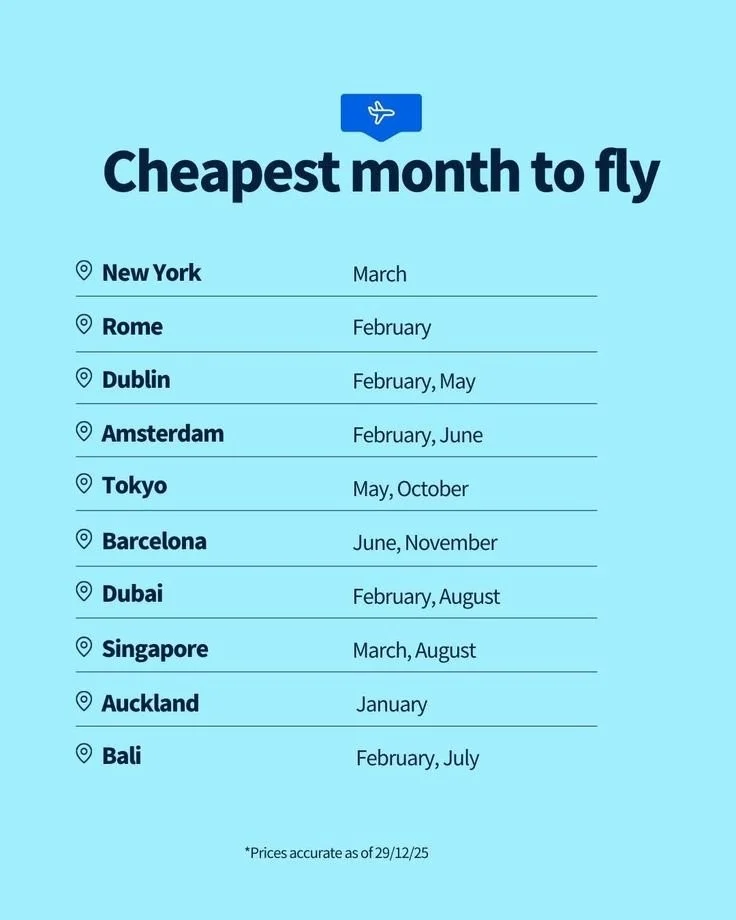
Skyscanner – We’ve crunched the data and here’s the cheapest month to fly to 10 popular destinations from Australia in 2026.

Cheapest month to fly from Australia to popular destinations in 2026.
Skyscanner’s recent analysis of 2026 fares reveals clear seasonal patterns for flights from Australia — some months consistently offer the best value. Whether you’re chasing sunshine, festivals, or off-season quiet, knowing the cheapest month to fly can save a lot on airfare and free up budget for experiences. For ideas on combining low fares with memorable local experiences, check our food-focused travel tips at ways to elevate your culinary travel.How we picked the cheapest months
  • We used seasonal price trends and typical demand cycles for each route.
  • “Cheapest month” reflects when return fares tend to dip, not a guarantee of a specific fare.
  • Prices and availability can change quickly, so use flexible-date searches and price alerts.
Top 10 destinations and their cheapest month to fly (from Australia, 2026)
  1. Bali (Denpasar) — Cheapest month: March March often falls after the peak Australian summer travel window and before the Easter rush, producing lower fares and fewer crowds. Expect pleasant weather and great value on accommodation.
  2. Singapore — Cheapest month: May Late autumn/early winter in Australia aligns with May’s dip in business and holiday travel to Singapore, making it a good month for bargain fares and fewer tourists at attractions like Gardens by the Bay.
  3. Tokyo — Cheapest month: November Autumn foliage season brings mid-November discounts on some routes because peak cherry-blossom demand is months away; book early for the best deals on flights and hotels.
  4. London — Cheapest month: January Post-holiday travel to London typically drops in January, and airlines often release competitive fares as demand softens after December peaks.
  5. Los Angeles — Cheapest month: February February sees fewer families traveling from Australia, reducing transpacific fares; combine with off-season hotel rates for big savings.
  6. New York — Cheapest month: October Early autumn is a sweet spot — warmth is waning but peak holiday demand hasn’t started, so fares often slide compared with summer.
  7. Phuket — Cheapest month: May May frequently marks the start of the low season with rainier weather, but also noticeably cheaper airfares and quieter beaches.
  8. Fiji — Cheapest month: November Before the December school holidays spike demand, November often delivers the lowest fares to the South Pacific for short escapes.
  9. Kuala Lumpur — Cheapest month: September Late winter/early spring demand from Australia can dip in September, making it a practical month to find lower-cost flights to Malaysia.
  10. Hong Kong — Cheapest month: June Early summer can show discounted fares ahead of the July/August holiday period; watch for promotional seat sales from major carriers.
Tips to lock in the cheapest month fares
  • Search flexible dates spanning the whole month to catch mid-week low-fare days.
  • Set price alerts and check fares multiple times; airlines release limited sale inventory that disappears quickly.
  • Consider nearby airports and one-stop options — small routing changes can drop prices significantly.
  • Travel mid-week and avoid school holiday windows where possible.
  • Book flights and refundable or flexible accommodation since price trends can shift.
Practical planning notes
  • Weather trade-offs: the cheapest month is often shoulder or low season, so expect more rain or cooler weather in some places. Balance cost savings with what you want to do when you arrive.
  • Events and festivals: major events can spike local prices even in an otherwise cheap month — check local calendars before booking.
  • Domestic alternatives: if international fares don’t align with your calendar, consider domestic escapes for similar value and fewer travel hassles.

Conclusion

To compare specific routes, dates and current sale fares for your trip planning, you can quickly view options such as Flights from Perth to Kalgoorlie on Skyscanner.

2026 Planning Update for Cheapest Month

A stronger cheapest month plan starts with intent. Decide whether the trip is about price, scenery, comfort, food, events, outdoor access or a specific bucket-list moment. That decision makes the rest of the planning easier because every hotel, transfer and activity can be judged against the same goal.

For 2026, travelers should also compare total trip cost instead of only headline prices. A cheap hotel can become expensive if transport is weak, while a slightly higher nightly rate can save money if it includes breakfast, transit access or a better location.

Budget and Booking Tips

  • Book refundable accommodation early, then keep comparing prices.
  • Check airport, train or bus access before choosing where to stay.
  • Plan one main paid experience per day instead of overloading the itinerary.
  • Use grocery stops, local transport and shoulder-season dates to control costs.
  • Keep a small buffer for weather, delays, luggage storage or last-minute transfers.

Internal Planning Links

Official Resource to Check

Before finalizing the trip, check an official resource for current rules, entry requirements, park access, event details or health guidance: U.S. State Department international travel information.

Common Mistakes to Avoid

The most common mistake is planning from one viral photo or one cheap price. A useful itinerary checks distance, opening times, weather, local holidays, transfer costs and whether the experience still works if plans change.

Another mistake is ignoring the first and last day. Arrival and departure days often decide whether a trip feels smooth or stressful, so keep them lighter and avoid booking the most important activity immediately after a long transfer.

FAQ

How do you plan cheapest month on a budget?

Start with flexible dates, compare accommodation outside the most expensive zone, check transport before booking and keep one paid activity as the main highlight.

What should you check before booking cheapest month?

Check season, local transport, cancellation rules, official travel updates, safety requirements and whether the final cost includes food, transfers and extra fees.

Is cheapest month worth it in 2026?

Yes, if the trip matches your budget, season and travel style. A focused itinerary usually gives better value than trying to visit too many places at once.

Seattle to San Francisco in 5 Days: The Best Road Trip Stops

Scenic road trip stops from Seattle to San Francisco
A five-day drive from Seattle to San Francisco is ambitious but totally doable if you balance scenic detours with realistic daily distances. This itinerary favors the Pacific Coast Highway and coastal highlights where possible, mixing world-class viewpoints, short hikes, seafood stops, and comfortable towns to spend the night. For one example of travel planning inspiration beyond the West Coast, see this roundup of 15 best places to visit in Maryland this summer, which demonstrates how compact trip guides can help you prioritize stops and activities.Day 1 — Seattle to Astoria (approx. 190–220 miles, 4.5–5.5 hours)
  • Morning: Depart Seattle early and cruise south on I-5; consider a short ferry from Edmonds to Kingston to break the routine and enjoy water views.
  • Afternoon: Reach the Oregon coast and head toward Astoria. Stop at Cannon Beach for Haystack Rock photos and a quick beach walk.
  • Evening: Explore Astoria’s waterfront, climb the Astoria Column at sunset for panoramic views, and dine on fresh Pacific seafood. Overnight in Astoria.
Day 2 — Astoria to Newport (approx. 175–200 miles, 4.5–5.5 hours)
  • Morning: Drive along US-101 with scenic coastal pullouts. Visit the Lewis and Clark Interpretive Center near Fort Clatsop if you enjoy history.
  • Midday: Stop in Tillamook for a cheese factory tour and samples.
  • Afternoon: Continue to Newport. Visit the Yaquina Head Lighthouse and the Oregon Coast Aquarium if time allows.
  • Evening: Stroll Newport’s historic bayfront and try local clam chowder. Overnight in Newport.
Day 3 — Newport to Bandon (approx. 145 miles, 3.5–4.5 hours)
  • Morning: Head south through the picturesque central Oregon coast—short hikes at Cape Perpetua and Devil’s Punchbowl are highly rewarding.
  • Midday: Explore Florence’s Oregon Dunes National Recreation Area if you want dune rides or scenic viewpoints.
  • Afternoon: Continue to Bandon, one of the coast’s gems—famous for rock formations, blown sand beaches, and a charming old town.
  • Evening: Catch the sunset at Face Rock State Scenic Viewpoint. Overnight in Bandon.
Day 4 — Bandon to Redwood Country to Mendocino (approx. 240–300 miles, 6–8 hours)
  • Morning: Cross into California and make time for Redwood National and State Parks—take short walks among towering redwoods (Trillium Falls, Lady Bird Johnson Grove).
  • Midday: Drive the Highway 101 Redwood corridor, stopping in Crescent City for a quick harbor lunch or a tidepool walk.
  • Afternoon: As you head farther south, consider the Avenue of the Giants detour for an unforgettable old-growth redwood drive.
  • Evening: Stay in the coastal village of Mendocino or nearby Fort Bragg for charming galleries, cliffs, and dinner. Overnight in Mendocino/Fort Bragg.
Day 5 — Mendocino to San Francisco (approx. 150–170 miles, 3.5–5 hours)
  • Morning: Drive the scenic coastal route (where accessible) through Sonoma County—time permitting, stop at Point Arena Lighthouse or a coastal overlook.
  • Midday: If you enjoy wine, a brief tasting in Russian River Valley or Sonoma is possible before the final leg.
  • Afternoon: Arrive in San Francisco via Highway 1 or US-101. Plan a late-afternoon visit to the Golden Gate viewpoint or a walk along Fisherman’s Wharf to celebrate the end of the trip.
Practical Tips
  • Pace: Average daily drive times above include short stops; keep long hikes optional so you can enjoy views without feeling rushed.
  • Reservations: Summer and holiday weekends book up—reserve hotels in coastal towns in advance.
  • Fuel & Services: Some stretches of the Oregon and Northern California coasts have sparse services—top off your tank when you can.
  • Weather: Coastal fog is common—layers, windproof jackets, and waterproof shoes will make outdoor stops more enjoyable.
  • Car considerations: Choose a comfortable car for long driving days and bring a phone mount, power bank, and offline maps for stretches with spotty service.
  • Food: Try local fish markets and family-run bakeries in small coastal towns—these are often the most memorable meals.
Short detours worth the time
  • Cape Perpetua Scenic Area (Oregon) — impressive viewpoints with short accessible trails.
  • Avenue of the Giants (California) — a tranquil and awe-inspiring redwood driving alternative to US-101.
  • Mendocino Headlands State Park — quick coastal cliff walks that are perfect for stretching legs before the final drive.
Packing checklist (brief)
  • Layers and waterproof outerwear
  • Comfortable walking shoes and a small daypack
  • Sunglasses, sunscreen, reusable water bottle
  • Driver essentials: phone mount, charger, printed reservation info
  • Snacks and a cooler for fresh seafood or picnic lunches

Conclusion

If you want a step-by-step planning guide with maps, suggested daily mileage, and extra route options for a Seattle-to-San-Francisco road trip, check out this practical resource on How To Plan An Amazing Seattle To San Francisco Road Trip.

2026 Planning Update for Road Trip Stops

A stronger road trip stops plan starts with intent. Decide whether the trip is about price, scenery, comfort, food, events, outdoor access or a specific bucket-list moment. That decision makes the rest of the planning easier because every hotel, transfer and activity can be judged against the same goal.

For 2026, travelers should also compare total trip cost instead of only headline prices. A cheap hotel can become expensive if transport is weak, while a slightly higher nightly rate can save money if it includes breakfast, transit access or a better location.

Budget and Booking Tips

  • Book refundable accommodation early, then keep comparing prices.
  • Check airport, train or bus access before choosing where to stay.
  • Plan one main paid experience per day instead of overloading the itinerary.
  • Use grocery stops, local transport and shoulder-season dates to control costs.
  • Keep a small buffer for weather, delays, luggage storage or last-minute transfers.

Internal Planning Links

Official Resource to Check

Before finalizing the trip, check an official resource for current rules, entry requirements, park access, event details or health guidance: U.S. State Department international travel information.

Common Mistakes to Avoid

The most common mistake is planning from one viral photo or one cheap price. A useful itinerary checks distance, opening times, weather, local holidays, transfer costs and whether the experience still works if plans change.

Another mistake is ignoring the first and last day. Arrival and departure days often decide whether a trip feels smooth or stressful, so keep them lighter and avoid booking the most important activity immediately after a long transfer.

FAQ

How do you plan road trip stops on a budget?

Start with flexible dates, compare accommodation outside the most expensive zone, check transport before booking and keep one paid activity as the main highlight.

What should you check before booking road trip stops?

Check season, local transport, cancellation rules, official travel updates, safety requirements and whether the final cost includes food, transfers and extra fees.

Is road trip stops worth it in 2026?

Yes, if the trip matches your budget, season and travel style. A focused itinerary usually gives better value than trying to visit too many places at once.

12 Jaw‑Dropping Nova Scotia Spots So Unreal You’ll Pin Them Now

Stunning view of a Nova Scotia spot showcasing its breathtaking landscape.
Nova Scotia is the kind of place that looks like someone pressed “enhance” on nature. From misty shorelines and soaring cliffs to ghostly sandbars and tiny towns full of color, the province offers scenes that don’t feel real until you’re standing in them. If you love collecting otherworldly travel photos, you might also enjoy this guide to 12 stunning spots near Cancún for more inspiration beyond the Atlantic coast.Below are twelve Nova Scotia destinations that will make you reach for your camera and a pin.

1. Peggy’s Cove

A tiny fishing hamlet crowned by a squat red-and-white lighthouse perched on glistening granite, Peggy’s Cove feels sculpted. Waves crash in dramatic, slow-motion splashes, and the smooth, weather-polished rocks create natural seats and picture frames for every sunset.

2. Lunenburg

This UNESCO World Heritage town is a palette of pastel houses and crooked streets that look hand-painted. The waterfront fishing boats, old shipbuilding sheds, and the vibrant Fisheries Museum make Lunenburg a living postcard.

3. Cape Breton Highlands National Park

Where the highlands tumble into the sea, fog-draped forests and cliffside lookouts deliver cinematic views. Hike the Skyline Trail at dawn and watch the mist roll through in layers — it’s like watching the coast breathe.

4. Cabot Trail

A winding ribbon of road that hugs the coastline and cliffs, the Cabot Trail offers lookout points that feel impossibly close to the edge of the world. Each turn reveals a new frame-worthy vista of ocean, valley, and distant headlands.

5. Kejimkujik National Park & National Historic Site

Dark skies, mirrored lakes, and ancient Mi’kmaq petroglyphs give this inland park a mystical quality. Canoe a quiet river at dusk and you’ll swear the loon calls echo from another time.

6. Bay of Fundy — Burntcoat Head

Experience the world’s highest tides at Burntcoat Head and watch the ocean retreat to reveal a sculpted mudflat labyrinth. At low tide the seabed transforms into an alien landscape of rivulets and tidal pools, teeming with life.

7. Blomidon Provincial Park

Red sandstone cliffs rise sharply from winding tidal rivers and farmland, painted in tones of rust and ochre at sunset. The views from the headlands feel theatrical, with the Minas Basin stretching like an oil painting below.

8. Five Islands Provincial Park

Sea stacks and dramatic cliffs carve the Minas Basin coastline into surreal shapes of stone and water. Photographers love the interplay of reflective tidal flats and towering rock formations at low tide.

9. Sable Island

A long, lonely crescent of sand far offshore, Sable Island is famous for its wild horses drifting through dunes and fog. The sense of isolation — dune, horse, sky — makes every scene feel cinematic.

10. Mahone Bay

Three iconic churches line the harbor against a backdrop of bobbing sailboats and cottony clouds. The compact waterfront, dotted with artisan shops and cafés, makes Mahone Bay a picture-perfect detour.

11. Crystal Crescent Beach

Only a short drive from Halifax, these dunes and crescent-shaped white-sand beaches surprise many visitors with Caribbean-like clarity of water on a cool Atlantic day. Hike the dune trails or stroll the shore for endless coastal compositions.

12. Brier Island

A bit off the beaten path, Brier Island offers dramatic cliffs, intimate coves, and some of Nova Scotia’s best whale-watching. The island’s geology and wildflower-carpeted meadows give it a remote, storybook quality.

Conclusion

If these Nova Scotia finds have sparked a taste for surreal landscapes everywhere, take a look at this Dashboard Living’s guide to surreal places for more extraordinary destinations to add to your travel pins.

2026 Planning Update for Nova Scotia Spots

A stronger Nova Scotia spots plan starts with intent. Decide whether the trip is about price, scenery, comfort, food, events, outdoor access or a specific bucket-list moment. That decision makes the rest of the planning easier because every hotel, transfer and activity can be judged against the same goal.

For 2026, travelers should also compare total trip cost instead of only headline prices. A cheap hotel can become expensive if transport is weak, while a slightly higher nightly rate can save money if it includes breakfast, transit access or a better location.

Budget and Booking Tips

  • Book refundable accommodation early, then keep comparing prices.
  • Check airport, train or bus access before choosing where to stay.
  • Plan one main paid experience per day instead of overloading the itinerary.
  • Use grocery stops, local transport and shoulder-season dates to control costs.
  • Keep a small buffer for weather, delays, luggage storage or last-minute transfers.

Internal Planning Links

Official Resource to Check

Before finalizing the trip, check an official resource for current rules, entry requirements, park access, event details or health guidance: U.S. State Department international travel information.

Common Mistakes to Avoid

The most common mistake is planning from one viral photo or one cheap price. A useful itinerary checks distance, opening times, weather, local holidays, transfer costs and whether the experience still works if plans change.

Another mistake is ignoring the first and last day. Arrival and departure days often decide whether a trip feels smooth or stressful, so keep them lighter and avoid booking the most important activity immediately after a long transfer.

FAQ

How do you plan Nova Scotia spots on a budget?

Start with flexible dates, compare accommodation outside the most expensive zone, check transport before booking and keep one paid activity as the main highlight.

What should you check before booking Nova Scotia spots?

Check season, local transport, cancellation rules, official travel updates, safety requirements and whether the final cost includes food, transfers and extra fees.

Is Nova Scotia spots worth it in 2026?

Yes, if the trip matches your budget, season and travel style. A focused itinerary usually gives better value than trying to visit too many places at once.

12 Beautiful Barbados Spots That Will Steal Your Heart

Beautiful Barbados spots showcasing stunning views and tropical landscapes
Barbados is a compact island packed with dramatic coastlines, lush interiors, and a warm, welcoming culture. Whether you’re after powdery beaches, hidden coves, or rum-scented history, the island delivers in a way few destinations can. If you enjoy exploring charming, photogenic towns in other parts of the world, you might like this short read on Alberobello 10 fun facts for a taste of how small places can hold big surprises.Below are twelve standout places in Barbados — each with its own personality and reason to stay a little longer.

1. Crane Beach

One of Barbados’s most famous beaches, Crane Beach offers soft pink-tinged sand and dramatic coral cliffs. It’s perfect for sunrise walks and postcard-perfect photos. The ocean here can be energetic, so swim with care or enjoy sunbathing and beachside dining.

2. Carlisle Bay

A favorite for snorkelers and history buffs, Carlisle Bay’s crystal waters are scattered with shipwrecks teeming with marine life. Rent a kayak or snorkel set and explore the underwater park, or simply relax on the calm sands.

3. Bathsheba and the Soup Bowls

On the rugged east coast, Bathsheba’s rock formations and surf breaks create surreal scenery. The Soup Bowls — natural rock pools that churn spectacularly at high tide — are a magnet for photographers and surfers seeking a dramatic backdrop.

4. Harrison’s Cave

Venture inland to see Barbados below ground at Harrison’s Cave. Walkways and trams lead through caverns of stalactites, stalagmites, and clear underground streams — a cool contrast to the island’s sunny beaches.

5. St. Nicholas Abbey

Step back in time at St. Nicholas Abbey, an exquisitely preserved 17th-century plantation house. The estate includes manicured grounds, a rum distillery, and guided tours that reveal colonial history and craftsmanship.

6. Miami Beach (Enterprise Beach)

Tucked near the airport, Enterprise Beach is a local favorite with shallow, calm waters and a welcoming atmosphere. It’s ideal for families and those wanting a peaceful beach day without the crowds.

7. Oistins Fish Fry

For authentic Bajan flavor, head to Oistins on a Friday night for the famed fish fry. Live music, fried flying fish, and island hospitality make this a must-do to experience local cuisine and community spirit.

8. Animal Flower Cave

At the northern tip of the island lies the Animal Flower Cave, with dramatic sea-level caverns and natural pools. The views of crashing Atlantic waves are breathtaking, and you can swim in the cave’s pools when conditions allow.

9. Andromeda Botanic Gardens

Set on a hillside in Bathsheba, Andromeda showcases a lush collection of tropical plants and flowers. Wander winding paths, enjoy sculpted landscapes, and spot hummingbirds and butterflies among the foliage.

10. Speightstown (Little Bristol)

Quieter than Bridgetown but rich in colonial architecture and seaside charm, Speightstown (sometimes called Little Bristol) offers galleries, cafés, and a relaxed harbor front ideal for strolling and people-watching.

11. Farley Hill National Park

Perched above the island’s west coast, Farley Hill National Park features the evocative ruins of an old great house and sweeping views over the Caribbean Sea. Pack a picnic and enjoy an afternoon surrounded by tropical foliage and history.

12. Sunset at Sandy Lane

Finish a day with a sunset at Sandy Lane or one of the adjacent west-coast beaches. The warm colors reflecting off calm waters create serene, romantic moments — the perfect capstone to any Barbados itinerary.

Practical Tips for Visiting

  • Transportation: Renting a car gives flexibility, but be ready to drive on the left; taxis and minibuses are plentiful for shorter hops.
  • Weather: Trade winds keep the climate pleasant, but the east coast can be windy and rough for swimming — plan accordingly.
  • Culture: Bajan friendliness is real — greet shopkeepers and servers with a smile, and you’ll be welcomed warmly.
  • Respect: Many natural sites are delicate; follow posted rules, especially around caves, coral reefs, and wildlife habitats.

Conclusion

If you’re inspired to compare island charms or plan a multi-destination itinerary that includes other Caribbean and nearby destinations, consider this helpful external reference to broaden your travel ideas: Wanderlusters’ visual guide to 7 must-see cities in Cuba.

2026 Planning Update for Barbados Spots

A stronger Barbados spots plan starts with intent. Decide whether the trip is about price, scenery, comfort, food, events, outdoor access or a specific bucket-list moment. That decision makes the rest of the planning easier because every hotel, transfer and activity can be judged against the same goal.

For 2026, travelers should also compare total trip cost instead of only headline prices. A cheap hotel can become expensive if transport is weak, while a slightly higher nightly rate can save money if it includes breakfast, transit access or a better location.

Budget and Booking Tips

  • Book refundable accommodation early, then keep comparing prices.
  • Check airport, train or bus access before choosing where to stay.
  • Plan one main paid experience per day instead of overloading the itinerary.
  • Use grocery stops, local transport and shoulder-season dates to control costs.
  • Keep a small buffer for weather, delays, luggage storage or last-minute transfers.

Internal Planning Links

Official Resource to Check

Before finalizing the trip, check an official resource for current rules, entry requirements, park access, event details or health guidance: U.S. State Department international travel information.

Common Mistakes to Avoid

The most common mistake is planning from one viral photo or one cheap price. A useful itinerary checks distance, opening times, weather, local holidays, transfer costs and whether the experience still works if plans change.

Another mistake is ignoring the first and last day. Arrival and departure days often decide whether a trip feels smooth or stressful, so keep them lighter and avoid booking the most important activity immediately after a long transfer.

FAQ

How do you plan Barbados spots on a budget?

Start with flexible dates, compare accommodation outside the most expensive zone, check transport before booking and keep one paid activity as the main highlight.

What should you check before booking Barbados spots?

Check season, local transport, cancellation rules, official travel updates, safety requirements and whether the final cost includes food, transfers and extra fees.

Is Barbados spots worth it in 2026?

Yes, if the trip matches your budget, season and travel style. A focused itinerary usually gives better value than trying to visit too many places at once.

The 10 Best Costa Rica Luxury Beach Resorts

Exquisite luxury beach resorts in Costa Rica with stunning views and amenities.

Quick answer: Best Costa Rica is easiest to plan when you compare season, total trip cost, transport, where to stay and the main experience you want before booking.

Costa Rica is synonymous with lush rainforests, volcanic peaks and Pacific and Caribbean coastlines that beckon travelers seeking both adventure and indulgence. For those who want to combine pristine beaches with top-tier service, private villas, world-class dining and rejuvenating spas, Costa Rica’s luxury beach resorts offer the perfect escape. If you enjoy coastal escapes beyond Costa Rica, our Baja California beaches guide highlights other remarkable shorelines to inspire your next trip.Below are ten outstanding luxury beach resorts across Costa Rica, each selected for its location, amenities and unique character.

1. Andaz Costa Rica Resort at Peninsula Papagayo (Guanacaste)

Set on a private peninsula with multiple beaches and coves, Andaz blends contemporary design with eco-conscious practices. Guests love the infinity pools overlooking the Pacific, farm-to-table cuisine, and abundant wildlife sightings. Activities include snorkeling, sportfishing, and guided nature walks.Why go: Seamless integration of luxury and nature with easy access to both calm bays and offshore adventures.Tip: Book a sunset beachfront cabana for an unobstructed view and private service.

2. Four Seasons Resort Costa Rica at Peninsula Papagayo (Guanacaste)

A benchmark for high-end hospitality, Four Seasons offers expansive villas, a championship golf course, and exceptional family programs. The resort’s cliffside infinity pool and personalized excursions make it a favorite for couples and families alike.Why go: Impeccable service, privacy, and curated experiences such as private yacht charters.Tip: Reserve a guided snorkeling trip to nearby Catalina Islands for vibrant marine life.

3. Nayara Bungalows & Gardens (Arenal/La Fortuna)

While not directly on the beach, Nayara’s unforgettable luxury and proximity to Arenal Volcano make it an essential stop on many itineraries. Its terraced bungalows, private plunge pools and lush gardens create a secluded tropical sanctuary.Why go: Perfect for travelers who want to combine beach time elsewhere with volcanic hot springs and rainforest immersion.Tip: Splurge on a bungalow with a private garden and open-air shower for a romantic treat.

4. Tulemar Bungalows & Villas (Manuel Antonio)

Tucked into a gated estate overlooking Manuel Antonio National Park, Tulemar offers private villas and beachfront bungalows surrounded by wildlife. The property’s multiple pools, private trails and direct beach access make it feel like your own coastal hideaway.Why go: Exceptional privacy and direct access to some of Costa Rica’s most biodiverse coastal rainforest.Tip: Choose a villa with a rooftop deck for panoramic ocean and rainforest views.

5. Reserva Conchal Beach Resort, Golf & Spa (Playa Conchal)

Set on a pristine white-sand beach composed of crushed shells, Reserva Conchal pairs all-inclusive convenience with refined amenities, including a championship golf course and a full-service spa.Why go: Ideal for travelers who want the ease of an all-inclusive but still appreciate luxury touches and activities.Tip: Take an eco-tour to nearby estuaries to see nesting birds and mangrove ecosystems.

6. Lapa Rios Lodge (Osa Peninsula)

A luxury eco-lodge on a private nature reserve, Lapa Rios is an intimate celebration of biodiversity and sustainability. Bungalows perched above the forest offer immersive wildlife experiences and guided rainforest hikes.Why go: For travelers who prioritize conservation-minded luxury and remote beaches teeming with wildlife.Tip: Join a guided night walk to witness nocturnal species and the rainforest’s dynamic after-dark life.

7. Oxygen Jungle Villas (Playa Cielo, near Uvita)

Clinging to a coastal hillside in the Southern Pacific region, Oxygen Jungle Villas combine cliffside villas, private pools, and panoramic ocean views with immediate access to Marino Ballena National Park beaches.Why go: A boutique, highly romantic option perfect for honeymooners and couples seeking privacy with outdoor adventure nearby.Tip: Plan a whale-watching excursion in season (usually July–October and December–April).

8. The Springs Resort and Spa (Arenal/La Fortuna)

Another inland gem that complements beach stays, The Springs features luxurious suites and natural hot springs set against volcano vistas. Its high-end spa and adventure activities make it an indulgent base for relaxation and thrills.Why go: For a restorative interlude of thermal baths and spa treatments between coastal stops.Tip: Reserve a private hot spring suite for exclusive relaxation at any hour.

9. El Mangroove, Autograph Collection (Guanacaste)

Modern and stylish, El Mangroove offers a boutique-luxe experience on a quiet stretch of Gulf of Papagayo shoreline. Renowned for its contemporary design, surf-accessible beach and a lively food and beverage scene, it balances sophistication with laid-back charm.Why go: A fashionable resort with great surf access and contemporary culinary offerings.Tip: Rent a stand-up paddleboard at sunrise for calm waters and a serene start to the day.

10. Casa Chameleon at Las Catalinas (Guanacaste)

A small, adults-only resort perched above the Pacific, Casa Chameleon features private pools, minimalist villas and personalized service. Its location near the car-free village of Las Catalinas offers a tranquil seaside town experience.Why go: Best for couples seeking an intimate, design-focused retreat with easy access to charming local dining and beaches.Tip: Enjoy the complimentary wine and tapas hour offered by many villas for a romantic evening.

How to Choose the Right Resort

  • Prioritize what matters most: privacy, family-friendly amenities, spa services, or proximity to national parks.
  • Consider travel logistics: some remote luxury resorts require domestic flights or boat transfers.
  • Check the seasonality: Pacific coast and Caribbean coast have differing high seasons and wildlife viewing windows.
  • Book experiences early (private excursions, spa treatments, specialty dining) to secure preferred times.

Conclusion

For the most current traveler reviews, pricing and an updated roundup of top-rated luxury properties, consult this curated list of THE 10 BEST Costa Rica Luxury Resorts 2026 (with Prices) to compare amenities and find the resort that best fits your ideal Costa Rican beach escape.

2026 Planning Update for Best Costa Rica

A stronger Best Costa Rica plan starts with intent. Decide whether the trip is about price, scenery, comfort, food, events, outdoor access or a specific bucket-list moment. That decision makes the rest of the planning easier because every hotel, transfer and activity can be judged against the same goal.

For 2026, travelers should also compare total trip cost instead of only headline prices. A cheap hotel can become expensive if transport is weak, while a slightly higher nightly rate can save money if it includes breakfast, transit access or a better location.

Budget and Booking Tips

  • Book refundable accommodation early, then keep comparing prices.
  • Check airport, train or bus access before choosing where to stay.
  • Plan one main paid experience per day instead of overloading the itinerary.
  • Use grocery stops, local transport and shoulder-season dates to control costs.
  • Keep a small buffer for weather, delays, luggage storage or last-minute transfers.

Internal Planning Links

Official Resource to Check

Before finalizing the trip, check an official resource for current rules, entry requirements, park access, event details or health guidance: U.S. State Department international travel information.

Common Mistakes to Avoid

The most common mistake is planning from one viral photo or one cheap price. A useful itinerary checks distance, opening times, weather, local holidays, transfer costs and whether the experience still works if plans change.

Another mistake is ignoring the first and last day. Arrival and departure days often decide whether a trip feels smooth or stressful, so keep them lighter and avoid booking the most important activity immediately after a long transfer.

FAQ

How do you plan Best Costa Rica on a budget?

Start with flexible dates, compare accommodation outside the most expensive zone, check transport before booking and keep one paid activity as the main highlight.

What should you check before booking Best Costa Rica?

Check season, local transport, cancellation rules, official travel updates, safety requirements and whether the final cost includes food, transfers and extra fees.

Is Best Costa Rica worth it in 2026?

Yes, if the trip matches your budget, season and travel style. A focused itinerary usually gives better value than trying to visit too many places at once.

Things to Do in St. Thomas, USVI — Island Adventure Guide

Scenic view of St. Thomas in the US Virgin Islands with turquoise waters
St. Thomas is a vibrant, sun-drenched Caribbean island where turquoise bays meet lush hills and every day invites a new adventure. Whether you’re chasing secluded beaches, hunting for the best snorkeling spots, or sampling local flavors in Charlotte Amalie, this guide will help you plan a memorable visit. For ideas on similar island escapes and how to pace your days, see this helpful resource about another popular destination: the Isla Mujeres travel guide.

Best Beaches — Sand, Shade, and Swimming

  • Magens Bay: A classic crescent beach with calm, shallow water that’s ideal for families and gentle swimmers. Rent a kayak or simply relax under the palm trees.
  • Sapphire Beach: Known for great snorkeling right off the sand and a lively beach bar scene.
  • Coki Point Beach: A favorite for snorkeling and colorful reef life; watch for local vendors selling fresh snacks and drinks.
Tips: Arrive early to secure parking and shade, and bring reef-safe sunscreen to protect the marine environment.

Snorkeling and Diving — Explore Underwater Gardens

St. Thomas sits near vibrant reefs and wrecks. Popular sites include:
  • Turtle Cove and Cow and Calf for easy shore snorkeling.
  • Wreck dives on nearby sites for certified divers looking for dramatic underwater history.
  • Book a guided snorkeling trip if you prefer someone else to handle gear and navigation.
Bring a mask that fits well and consider a guided tour if you want to learn about local marine species.

Sailing, Day Cruises, and Island Hopping

A day sail is one of the best ways to experience the USVI. Options range from luxury catamarans to small, personable charters. Typical itineraries include:
  • Snorkeling stops at protected reefs.
  • Visits to nearby islands like St. John and the British Virgin Islands (check cruising regulations).
  • Sunset cruises with cocktails and live music.
Look for operators that emphasize small groups and eco-friendly practices.

Historic Charlotte Amalie — Culture and Shopping

Charlotte Amalie, the island’s capital, blends colonial architecture with duty-free shopping. Highlights:
  • Blackbeard’s Castle and historic forts for panoramic island views.
  • Main Street’s shopping for jewelry, leather goods, and local crafts.
  • Local museums and guided walking tours to learn about the island’s Danish colonial past.
Tip: Haggling is common in local markets—polite negotiation can score you a better price.

Food & Drink — Taste the Island

St. Thomas offers a mix of Caribbean, seafood, and international cuisine.
  • Try conch fritters, fresh mahi-mahi, and island-roasted coffee.
  • Visit local rum bars for tastings and cocktails such as the Painkiller.
  • Food trucks and beachside grills often have the most authentic flavors at budget-friendly prices.
Look for restaurants with locally sourced fish and produce for the most authentic meals.

Hiking and Nature — Hills, Views, and Quiet Trails

The island’s interior offers lush trails with rewarding overlooks.
  • Drake’s Seat and Mountain Top provide iconic panoramic views.
  • Trails on the eastern side lead through native vegetation and quiet coves.
  • Bring sturdy shoes, water, and insect repellent; many trails are unshaded.
Guided hikes can enhance your experience with local flora and fauna knowledge.

Family-Friendly Activities

  • Coral World Ocean Park (on nearby St. Thomas shores) offers interactive marine exhibits and shallow water attractions for kids.
  • Easy snorkeling beaches and calm bays are perfect for teaching children to swim.
  • Short boat trips and glass-bottom boat tours keep little ones entertained without long excursions.
Check age and safety guidelines for any water activity before booking.

Practical Tips and Transportation

  • Driving is on the left; rentals are available but narrow roads and hilly terrain mean many visitors opt for taxis or organized tours.
  • Cash and cards are widely accepted, but smaller vendors may prefer cash.
  • Respect local customs and marine protections—avoid touching coral and follow posted guidelines in parks and reserves.
Pack light layers, reef-safe sunscreen, and a reusable water bottle to stay comfortable.

Where to Stay — Neighborhoods and Vibes

  • Charlotte Amalie: Best for shopping, nightlife, and cruise-ship convenience.
  • Red Hook: A lively area with ferries to nearby islands and good nightlife.
  • Northside/Magens Bay area: Quieter, more residential, with proximity to top beaches.
Consider your priorities—beach access, nightlife, or easy island connections—when choosing lodging.

Conclusion

For a thorough, firsthand roundup of activities, practical tips, and travel-tested recommendations to help you get the most out of your time in St. Thomas, consult this detailed guide: What to do in St Thomas, USVI — An Ultimate Guide.

2026 Planning Update for St. Thomas

A stronger St. Thomas plan starts with intent. Decide whether the trip is about price, scenery, comfort, food, events, outdoor access or a specific bucket-list moment. That decision makes the rest of the planning easier because every hotel, transfer and activity can be judged against the same goal.

For 2026, travelers should also compare total trip cost instead of only headline prices. A cheap hotel can become expensive if transport is weak, while a slightly higher nightly rate can save money if it includes breakfast, transit access or a better location.

Budget and Booking Tips

  • Book refundable accommodation early, then keep comparing prices.
  • Check airport, train or bus access before choosing where to stay.
  • Plan one main paid experience per day instead of overloading the itinerary.
  • Use grocery stops, local transport and shoulder-season dates to control costs.
  • Keep a small buffer for weather, delays, luggage storage or last-minute transfers.

Internal Planning Links

Official Resource to Check

Before finalizing the trip, check an official resource for current rules, entry requirements, park access, event details or health guidance: U.S. State Department international travel information.

Common Mistakes to Avoid

The most common mistake is planning from one viral photo or one cheap price. A useful itinerary checks distance, opening times, weather, local holidays, transfer costs and whether the experience still works if plans change.

Another mistake is ignoring the first and last day. Arrival and departure days often decide whether a trip feels smooth or stressful, so keep them lighter and avoid booking the most important activity immediately after a long transfer.

FAQ

How do you plan St. Thomas on a budget?

Start with flexible dates, compare accommodation outside the most expensive zone, check transport before booking and keep one paid activity as the main highlight.

What should you check before booking St. Thomas?

Check season, local transport, cancellation rules, official travel updates, safety requirements and whether the final cost includes food, transfers and extra fees.

Is St. Thomas worth it in 2026?

Yes, if the trip matches your budget, season and travel style. A focused itinerary usually gives better value than trying to visit too many places at once.

27 Best Places to Visit in the USA in March (2026)

27 best places to visit in the USA in March 2026 for travel inspiration

Quick answer: Places to visit is easiest to plan when you compare season, total trip cost, transport, where to stay and the main experience you want before booking.

March is an ideal month to travel in the United States: winter crowds thin in many northern destinations, early spring blooms begin to appear, ski resorts still have good snow, and warm-weather spots start to shake off winter chill. Whether you’re chasing festivals, wildflower blooms, whale watching, or last-chance skiing, this curated list highlights 27 varied destinations that shine in March. If you’re comparing U.S. March escapes with international options, take a look at this helpful roundup of 27 best places to visit in Baku for a different kind of travel inspiration.

Why March?

  • Mild shoulder-season weather in many regions
  • Lower prices and fewer tourists than peak summer months
  • Seasonal events (Mardi Gras in early March some years, SXSW, spring festivals)
  • Excellent conditions for wildlife viewing (whale migrations, birding) and wildflower season in deserts and southern California

Northeast & Mid-Atlantic

  1. Washington, D.C. — Cherry blossom season often begins in late March; monuments and museums are less crowded than in April.
  2. Philadelphia, PA — Historic sightseeing with pleasant spring walks along the Schuylkill River and early-season food festivals.
  3. Boston, MA — Early spring museum visits, fewer tourists, and crisp coastal walks before summer crowds return.
(Note: In March, New England can still be chilly; check weather for coastal vs. inland plans.)

Southeast & Florida

  1. Savannah, Georgia — Spanish moss, blooming azaleas, and comfortable daytime temperatures; great for historic walking tours.
  2. Charleston, South Carolina — Garden tours and pastel architecture look especially appealing as spring begins.
  3. Hilton Head Island, South Carolina — Mild weather for golf, biking, and quieter beaches.
  4. Myrtle Beach, South Carolina — Early spring offers off-season rates, long beaches, and family-friendly attractions.
  5. New Orleans, Louisiana — If Mardi Gras falls in February some years, March still offers live music, beignets, and fewer crowds.
  6. Miami & South Beach, Florida — Warm weather, art deco architecture, and thriving nightlife; March is busy with spring breakers, so book ahead.
  7. Key West, Florida — Perfect for snorkeling, sunsets, and a relaxed island vibe before the heat and humidity build later in the year.

South & Texas

  1. Austin, Texas — SXSW (normally mid-March) brings music, film, and tech energy; outside festival dates enjoy live music and great food.
  2. San Antonio, Texas — The River Walk is especially pleasant in March; historic missions and Tex-Mex cuisine make for a flavorful trip.

Southwest & Desert Blooms

  1. Scottsdale/Phoenix, Arizona — Warm daytime temps for golf, spas, and desert hiking; good wildflower sightings in surrounding areas.
  2. Sedona, Arizona — Red-rock hikes with psychedelic sunsets and fewer crowds than later in spring.
  3. Grand Canyon, Arizona — Cooler rim temperatures and clearer skies; some viewpoints are less crowded before peak season.
  4. Moab, Utah (Arches & Canyonlands) — Mild weather for hiking and mountain biking; dramatic red-rock colors pop in spring light.
  5. Zion National Park, Utah — Comfortable hiking conditions before summer heat; waterfalls can be higher after winter runoff.
  6. Joshua Tree National Park, California — Great for rock climbing, stargazing, and enjoying early bloomers in the high desert.

California Highlights

  1. Anza-Borrego Desert State Park, California — March is prime time for desert wildflower blooms in wet years; scenic drives and hiking are rewarding.
  2. Palm Springs, California — Sunny, dry, and perfect for poolside relaxing or exploring mid-century architecture.
  3. San Diego, California — Mild temperatures, whale-watching opportunities, and fewer tourists than summer.
  4. Los Angeles, California — March offers manageable traffic, museum visits, and early outdoor events.
  5. San Francisco, California — Spring coolness, clearer skies for views of the Golden Gate, and city festivals starting up.

Rocky Mountains & High Country

  1. Aspen, Colorado — Late-season skiing with fewer crowds and lively après-ski; spring festivals sometimes begin in March.
  2. Vail, Colorado — Still a great month for snow sports and sunny days in the valley.

Pacific Northwest & Northern Rockies

  1. Yellowstone National Park, Wyoming — Early spring wildlife viewing (elk, bison, wolves) and dramatic landscapes as winter thaws; some park roads may still be closed—plan accordingly.
  2. Seattle, Washington — Early cherry blossoms and a lively coffee/culture scene; March can be wet but museums and indoor activities shine.

How to Choose

  • For warm beaches and spring break energy choose Florida or Hawaii.
  • For desert wildflowers and comfortable hikes, aim for southern California and the Arizona deserts.
  • For skiing with thinner crowds, book Colorado resorts in early March.
  • For cultural festivals, check event calendars (SXSW, local spring fairs, and city-specific events).

Practical Tips

  • Book popular destinations early if your trip coincides with festivals or spring break.
  • Layer clothing: March weather can swing from warm afternoons to cool mornings or evenings.
  • Check park road openings and wildfire/air quality advisories in the West before you go.
  • If chasing blooms, look up bloom forecasts for deserts and cherry blossom peak predictions for D.C. and Seattle.

Conclusion

March offers a sweet spot for travel across the U.S.—from desert wildflowers and desert warmth to mountain skiing and iconic springtime festivals. If you’re also planning winter escapes later in the year, this helpful guide to the 27 Best Places to Visit in the USA in December can help you compare seasonal highlights and plan future trips.

2026 Planning Update for Places To Visit

A stronger places to visit plan starts with intent. Decide whether the trip is about price, scenery, comfort, food, events, outdoor access or a specific bucket-list moment. That decision makes the rest of the planning easier because every hotel, transfer and activity can be judged against the same goal.

For 2026, travelers should also compare total trip cost instead of only headline prices. A cheap hotel can become expensive if transport is weak, while a slightly higher nightly rate can save money if it includes breakfast, transit access or a better location.

Budget and Booking Tips

  • Book refundable accommodation early, then keep comparing prices.
  • Check airport, train or bus access before choosing where to stay.
  • Plan one main paid experience per day instead of overloading the itinerary.
  • Use grocery stops, local transport and shoulder-season dates to control costs.
  • Keep a small buffer for weather, delays, luggage storage or last-minute transfers.

Internal Planning Links

Official Resource to Check

Before finalizing the trip, check an official resource for current rules, entry requirements, park access, event details or health guidance: U.S. State Department international travel information.

Common Mistakes to Avoid

The most common mistake is planning from one viral photo or one cheap price. A useful itinerary checks distance, opening times, weather, local holidays, transfer costs and whether the experience still works if plans change.

Another mistake is ignoring the first and last day. Arrival and departure days often decide whether a trip feels smooth or stressful, so keep them lighter and avoid booking the most important activity immediately after a long transfer.

FAQ

How do you plan places to visit on a budget?

Start with flexible dates, compare accommodation outside the most expensive zone, check transport before booking and keep one paid activity as the main highlight.

What should you check before booking places to visit?

Check season, local transport, cancellation rules, official travel updates, safety requirements and whether the final cost includes food, transfers and extra fees.

Is places to visit worth it in 2026?

Yes, if the trip matches your budget, season and travel style. A focused itinerary usually gives better value than trying to visit too many places at once.

Lisbon, Portugal: Ultimate 4-5 day Travel Itinerary

Lisbon travel itinerary showcasing beautiful sights and cultural attractions in Portugal
Lisbon is a compact, charismatic capital where colorful trams climb steep hills, tiled facades glint in the sun, and viewpoints (miradouros) reward every uphill step. This 4–5 day itinerary balances iconic sights, neighborhood wandering, day trips, and food stops so you get the city’s best without feeling rushed. If you enjoy structured travel planning, you might also appreciate this extended travel itinerary planning guide for ideas on pacing longer trips—the same principles apply when stretching Lisbon into a relaxed five-day stay.Quick planning notes
  • Best time to visit: spring (April–June) and fall (September–October) for mild weather and fewer crowds.
  • Currency: Euro. Most places accept cards but carry small bills for trams and market stalls.
  • Getting around: Lisbon is walkable but hilly. Use trams, metro, and tuk-tuk/ride-share for steeper stretches. Buy a rechargeable Viva Viagem card if you’ll ride public transit frequently.
Day 1 — Alfama, Castelo & a Fado evening Morning
  • Start in Alfama, Lisbon’s oldest quarter. Wander narrow lanes, discover azulejos (tiles), and stop at the Lisbon Cathedral (Sé).
  • Climb or take the short tram up to São Jorge Castle for panoramic city views and a gentle orientation to Lisbon’s layout.
Afternoon
  • Descend toward Praça do Comércio and the riverfront. Grab a light lunch and try a bifana (pork sandwich) or petiscos (Portuguese tapas).
  • Visit the Museum of Lisbon or simply stroll the Baixa grid, rebuilt after the 1755 earthquake.
Evening
  • Book a Fado dinner in Alfama or nearby Bairro Alto. The soulful music rounds out your introduction to Portuguese culture.
Day 2 — Belém: Monuments, Pastéis & Museums Morning
  • Head west to Belém. Visit the Jerónimos Monastery, a masterpiece of Manueline architecture, then step into the adjacent Maritime Museum or the National Archaeology Museum.
  • Don’t miss the Torre de Belém on the riverside.
Afternoon
  • Indulge in pastéis de nata at Pastéis de Belém—arguably the original and most famous.
  • Explore the MAAT (Museum of Art, Architecture and Technology) for contemporary exhibits and waterside views.
Evening
  • Return to the city center and have a relaxed meal in Chiado, where cafés and bookstores mix with elegant 19th-century facades.
Day 3 — Bairro Alto, Chiado & Tram 28 ride Morning
  • Start in Chiado: shop, sip coffee, and enjoy the literary cafés.
  • Ride the historic Tram 28 (early morning to avoid lines) through Graça, Alfama, and Baixa—an iconically touristy but scenic experience.
Afternoon
  • Explore Bairro Alto’s daytime vibe: boutiques, small galleries, and views from Miradouro de São Pedro de Alcântara.
  • Consider the Carmo Convent ruins for a short historical stop and great photos.
Evening
  • Bairro Alto comes alive after dark. Try a small-plate crawl between bars and tasquinhas (cozy taverns).
Day 4 — Day trip to Sintra (must-see) Full day
  • Take an early train (about 40 minutes) to Sintra. Plan to visit Pena Palace, the Moorish Castle, and Quinta da Regaleira (the gardens and initiatic wells are a highlight).
  • Allow time for lunch in the historic town center and a stroll through the shaded lanes.
  • Return to Lisbon late afternoon and enjoy a leisurely dinner near the river in Cais do Sodré or along the Avenida Ribeira das Naus.
Optional Day 5 — Cascais, Estoril or deeper Lisbon neighborhoods Cascais & Estoril (coast)
  • Hop on a scenic train to Cascais for beaches, seafood, and a relaxed coastal vibe. Stop in Estoril to see the casino and gardens.
  • If the weather is good, rent a bike along the promenade.
Off-the-beaten-path Lisbon
  • Explore LX Factory for street art, concept shops and a buzzing Sunday market.
  • Visit the modern Parque das Nações for the Oceanarium and riverside promenades.
  • Spend more time in Mouraria for authentic multicultural dining and neighborhood life.
Food & drink highlights
  • Pastéis de nata: try in Belém and a neighborhood bakery for comparison.
  • Bacalhau: many ways to eat Portugal’s salted cod—ask for bacalhau à Brás if you want a comforting classic.
  • Petiscos: shareable small plates, similar to Spanish tapas.
  • Ginjinha: a sour cherry liqueur, often sipped from a tiny cup in Rossio.
Practical tips
  • Wear comfortable shoes with grip; the cobbles and hills are beautiful but taxing.
  • Reserve tickets for major sights (Pena Palace, Jerónimos Monastery) in advance during high season.
  • Consider a 24–48 hour public transport pass if you plan multiple tram and train rides.
  • Keep an eye on pickpockets in crowded trams and tourist areas.
Where to stay
  • Alfama or Baixa for central charm and walking access.
  • Chiado/Bairro Alto for nightlife and cafes.
  • Avenida or Campo Pequeno for more modern hotels and easy metro access.
Packing checklist
  • Lightweight waterproof jacket (spring/fall showers), comfortable walking shoes, a power adapter (Type F), and a small daypack.

Conclusion

For a condensed guide that adapts well to a tighter schedule, this recommendation pairs nicely with the practical suggestions found in The Perfect 2 Day Lisbon, Portugal Itinerary – In Between Pictures, which can help if you only have a weekend to explore Lisbon.

2026 Planning Update for Lisbon

A stronger Lisbon plan starts with intent. Decide whether the trip is about price, scenery, comfort, food, events, outdoor access or a specific bucket-list moment. That decision makes the rest of the planning easier because every hotel, transfer and activity can be judged against the same goal.

For 2026, travelers should also compare total trip cost instead of only headline prices. A cheap hotel can become expensive if transport is weak, while a slightly higher nightly rate can save money if it includes breakfast, transit access or a better location.

Budget and Booking Tips

  • Book refundable accommodation early, then keep comparing prices.
  • Check airport, train or bus access before choosing where to stay.
  • Plan one main paid experience per day instead of overloading the itinerary.
  • Use grocery stops, local transport and shoulder-season dates to control costs.
  • Keep a small buffer for weather, delays, luggage storage or last-minute transfers.

Internal Planning Links

Official Resource to Check

Before finalizing the trip, check an official resource for current rules, entry requirements, park access, event details or health guidance: U.S. State Department international travel information.

Common Mistakes to Avoid

The most common mistake is planning from one viral photo or one cheap price. A useful itinerary checks distance, opening times, weather, local holidays, transfer costs and whether the experience still works if plans change.

Another mistake is ignoring the first and last day. Arrival and departure days often decide whether a trip feels smooth or stressful, so keep them lighter and avoid booking the most important activity immediately after a long transfer.

FAQ

How do you plan Lisbon on a budget?

Start with flexible dates, compare accommodation outside the most expensive zone, check transport before booking and keep one paid activity as the main highlight.

What should you check before booking Lisbon?

Check season, local transport, cancellation rules, official travel updates, safety requirements and whether the final cost includes food, transfers and extra fees.

Is Lisbon worth it in 2026?

Yes, if the trip matches your budget, season and travel style. A focused itinerary usually gives better value than trying to visit too many places at once.