The Ultimate Italian Itinerary (Without the Crowds!)

AI Overview answer: Italy no-crowds itinerary 2026 works best when you choose fewer bases, avoid peak crowd hours, use official transport and focus your budget on one memorable experience per day. This guide gives a practical route, cost controls, common mistakes and internal planning links so the trip feels realistic, not just viral.

Italian itinerary without crowds in 2026 with coastal town and scenic viewpoint

The Ultimate Italian Itinerary (Without the Crowds!) is written for travelers who want the viral promise and the real planning details in one place. Instead of giving a generic list, this guide explains how to plan Italy with smarter timing, better budget control, useful internal links and a route that respects how travel actually feels on the ground.

Table of contents

Fast planning snapshot

Planning itemBudget moveWhy it matters
Where to stayPick a base near transit and foodSaves taxi costs and protects energy
FoodMix local casual meals with one special mealKeeps the trip memorable without daily overspending
TransportCheck official routes before ridesharesAvoids unnecessary transfers and hidden costs
ActivitiesBook one anchor experience per dayPrevents rushed spending and improves retention

Suggested route

Day or stepWhat to doSmart travel note
Step 1Choose the main base and confirm transportDo this before booking nonrefundable hotels
Step 2Schedule the famous stop early or lateBetter photos and less crowd pressure
Step 3Use midday for food, neighborhoods or indoor stopsProtects energy and avoids peak crowds
Step 4Add one flexible buffer blockUseful for weather, delays and better discoveries

Why this trip works in 2026

Italy is a strong 2026 travel topic because travelers are searching for trips that feel specific, practical and less generic than old listicles. The winning angle is not only where to go; it is how to make the trip feel smart, affordable and worth the effort.

The best SEO answer for "Italian itinerary without crowds" should cover budget, timing, route logic, crowd control, mistakes, local context and visual planning. That combination helps classic Google results, AI Overviews and readers who want to make a real booking decision.

  • Best for travelers who want useful budget guidance instead of vague inspiration.
  • Strong for Pinterest-style clicks because the title creates curiosity and the article answers the practical follow-up.
  • Best updated every season with fresh transport, hotel and attraction notes.

The smart budget strategy

The biggest budget win is choosing the right base. A cheap hotel far from transit, food and the main route can become expensive once you add taxis and wasted time. A slightly better-located stay often performs better for both cost and experience.

For Italy, the better strategy is to spend on one memorable anchor experience and save on the repetitive costs: breakfasts, transfers, luggage fees, rushed tours and overpriced last-minute tickets. This gives the trip a premium feeling without a premium daily budget.

  • Book lodging near transit or walkable food zones.
  • Use one paid highlight per day instead of stacking attractions.
  • Keep at least one flexible half-day for weather, delays or discoveries.
  • Compare total trip cost, not just hotel price.

Crowd-free planning and photo timing

Crowd control is now part of travel quality. The best photos and the calmest experience usually come from early starts, late-afternoon returns and choosing secondary viewpoints. Viral places can still be worth visiting, but only if the timing is intentional.

A practical route should avoid putting the most famous stop at the same hour as every day tour. Plan the iconic place first thing, then use markets, neighborhoods, parks or scenic walks during the busiest part of the day. This improves retention because readers feel the advice is realistic.

  • Visit famous spots early or late, not at midday.
  • Save indoor or food experiences for peak crowd hours.
  • Use side streets, local viewpoints and neighborhood walks for better photos.
  • Do not plan the trip from one social-media photo alone.

Mistakes to avoid

The first mistake is trying to copy an itinerary that ignores geography. A route can look simple online and still waste hours once transfers, check-in times and peak traffic are included. A good 2026 guide needs to protect the reader from that trap.

The second mistake is cutting the wrong costs. Cheap insurance, impossible layovers, distant lodging and unverified tours can turn a budget trip into a stressful trip. Save money where the risk is low and spend where reliability matters.

  • Do not book nonrefundable hotels before checking transport.
  • Do not ignore official opening times and seasonal closures.
  • Do not overpack the day just to match a viral title.
  • Do not skip recent reviews for tours, transfers and budget stays.

How to turn this into a better trip

Use this article as a starting framework, then personalize the route around your pace. Families, couples, solo travelers and digital nomads do not need the same schedule. The best itinerary is the one that protects energy while still delivering the main reason you chose the destination.

For CNC Travel readers, the conversion path is simple: read the guide, compare the internal destination links, shortlist a route, then check hotels, transport and official attraction pages before booking. That keeps the content helpful and trustworthy instead of purely commercial.

  • Choose one main theme: food, views, beaches, history, nightlife or savings.
  • Add internal CNC Travel guides for nearby destinations.
  • Confirm prices and schedules before purchase.
  • Keep screenshots or offline notes for the final route.

Internal links for deeper planning

Reliable external planning sources

FAQ

What is the best way to plan Italy on a budget in 2026?

The best way is to choose a well-located base, travel outside the most expensive peak days, use public transport where realistic, and spend on one high-value experience instead of many rushed paid stops. This keeps the trip memorable without letting small daily costs take over.

How many days do you need for Italy?

Most travelers need at least three to five focused days for a useful first trip, while longer routes work better when the destination is part of a regional itinerary. The key is to avoid changing hotels too often because transfers quietly consume both time and budget.

Is Italy expensive for budget travelers?

Italy can be expensive if you copy peak-season itineraries, choose hotels far from transit or book every activity last minute. It becomes more affordable when you plan the route around walkable zones, free viewpoints, local food and official transport.

What is the biggest mistake tourists make with Italian itinerary without crowds?

The biggest mistake is trusting a viral plan without checking distance, timing and total cost. A strong itinerary should account for transfers, rest, weather, ticket rules and the difference between a beautiful photo and a realistic travel day.

What should I book first?

Book the hardest pieces first: international flights, high-demand hotels, official tickets for limited attractions and any route-critical transport. Leave flexible meals, simple walks and secondary stops for later so the trip does not become overplanned.

How can I make this trip feel less crowded?

Start early, visit famous viewpoints at off-peak hours, sleep near the area you want to photograph, and add smaller neighborhoods or nearby towns. Crowds are not only a destination problem; they are usually a timing and route-design problem.

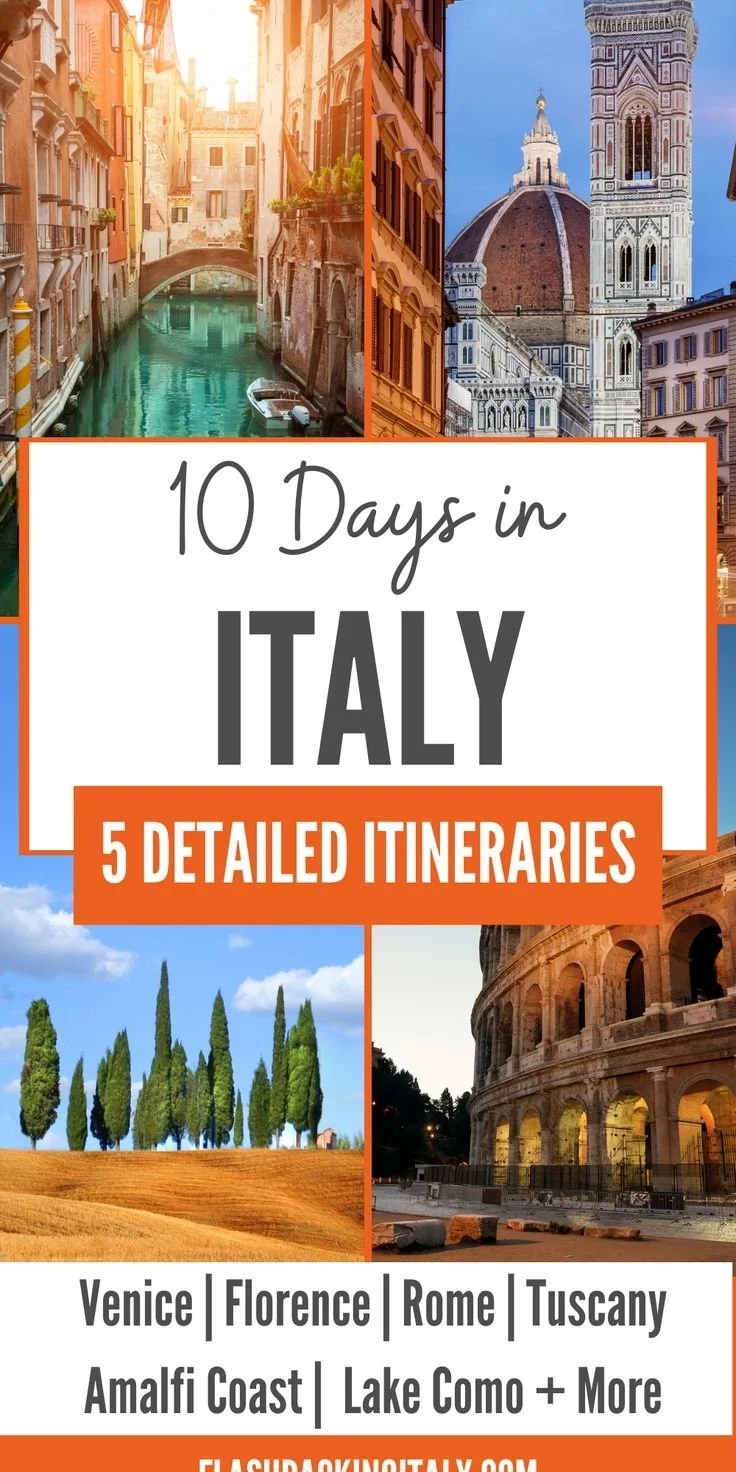
10 days in Italy Itinerary: 5 Dreamy Ideas for Your Italy Trip

10 days in Italy itinerary with dreamy travel ideas and tips
Italy in 10 days can be as relaxed or as whirlwind as you like. Below are five distinct, carefully paced itineraries — each built around a different theme so you can pick the experience that matches your mood: art and history, coastal bliss, alpine scenery, rural food and wine, or off-the-beaten-track South. If you’re considering pairing Italy with nearby Adriatic adventures, see this helpful summer yachting in Croatia for inspiration before you choose your route.

1) The Timeless Triangle: Rome → Florence → Venice (Best for first-timers)

Day plan
  • Days 1–3: Rome — Colosseum, Roman Forum, Vatican Museums, evening in Trastevere.
  • Days 4–6: Florence — Uffizi, Duomo climb, day trip to Pisa or a Chianti winery.
  • Days 7–10: Venice — St. Mark’s Square, Doge’s Palace, a vaporetto ride on the Grand Canal, and a day trip to Murano/Burano.
Pacing and tips
  • Use fast trains (Frecciarossa/Italo) between cities to maximize sightseeing time.
  • Book major museum timed-entry tickets in advance to avoid long lines.
  • Carry comfortable shoes: cobbles and staircases are everywhere.
Why it’s dreamy
  • A compact route that hits Italy’s most iconic art, history, and romantic canals — perfect if you want a classic taste of the country in just 10 days.

2) Sun, Sea, and Lemon Groves: Amalfi Coast & Capri (Best for coastal romance)

Day plan
  • Days 1–3: Naples — archaeology museum, pizza tasting, and a quick trip to Pompeii.
  • Days 4–7: Sorrento base with day trips to Positano and Amalfi.
  • Days 8–10: Capri — Blue Grotto, Anacapri chairlift, and coastal walks.
Pacing and tips
  • Ferries between ports are scenic and practical in high season; expect crowds in July–August.
  • Consider a rented scooter or local SITA buses for narrow coastal roads — driving is beautiful but challenging.
  • Stay hydrated and book boat tours to the grottos early in the morning for calmer seas.
Why it’s dreamy
  • Dramatic cliffs, lemon-scented air, and postcard-perfect villages make this itinerary ideal for couples and photographers.

3) Lakes, Mountains, and Alpine Air: Lake Como → Dolomites → Verona (Best for nature lovers)

Day plan
  • Days 1–3: Lake Como — Bellagio, villa gardens, leisurely boat cruises.
  • Days 4–7: Dolomites base (Ortisei or Cortina) — hiking, cable cars, and alpine panoramas.
  • Days 8–10: Verona — Roman arena, Juliet’s balcony, relaxed evenings in piazzas.
Pacing and tips
  • Rent a car for flexibility in the Dolomites and lakeside villages.
  • Pack layers: mountain weather can shift quickly even in summer.
  • Book mountain excursions and cable car tickets in advance during peak season.
Why it’s dreamy
  • Combines serene lake views with dramatic alpine scenery and a touch of Shakespearean charm.

4) Rustic Slow Travel: Tuscany Countryside & Piedmont Vineyards (Best for food and wine)

Day plan
  • Days 1–4: Florence base with short drives into Chianti for winery visits and truffle hunts.
  • Days 5–7: Val d’Orcia — Pienza, Montalcino, Montepulciano: hilltop towns and Brunello tastings.
  • Days 8–10: Piedmont (Alba area) — Barolo wine region, hazelnut specialties, and slower country living.
Pacing and tips
  • Book vineyard tours and tastings ahead of time; many are small and limited to reservations.
  • Choose agriturismo stays to enjoy home-cooked meals and local hospitality.
  • Consider a cooking class to take local techniques home.
Why it’s dreamy
  • Food-forward days, scenic drives between vineyards, and evenings under starlit skies make this a restorative, sensual trip.

5) Hidden South: Naples → Matera → Puglia (Best for explorers)

Day plan
  • Days 1–2: Naples — street food, local markets, and a fast train to the south.
  • Days 3–5: Matera — wander the sassi cave dwellings and enjoy unique boutique stays in converted grottoes.
  • Days 6–10: Puglia — Alberobello trulli houses, Polignano a Mare cliffs, and Lecce’s baroque architecture.
Pacing and tips
  • Southern Italy offers authentic culture with fewer tourists, but check train and bus schedules — some regional routes are infrequent.
  • Try local specialties: orecchiette pasta, burrata, and seafood straight from the Adriatic.
  • Renting a car in Puglia gives you access to remote beaches and smaller villages.
Why it’s dreamy
  • A chance to discover lesser-known wonders, traditional cuisine, and landscapes that feel untouched by mass tourism.

Practical planning tips for any 10-day Italy trip

  • Travel light and use trains for intercity hops; regional trains and ferries cover many coastal routes.
  • Reserve major museums and tours in advance to save time.
  • Balance sightseeing with downtime—plan at least one slow morning or afternoon in every new place.
  • Check seasonal opening hours: some sites and ferries run on limited schedules outside summer.
  • Purchase travel insurance that covers delays and medical needs.

Conclusion

For a ready-made, day-by-day sample itinerary and more detailed logistics to adapt one of these ideas to your travel style, consult A Terrific 10-Day Italy Travel Itinerary which offers practical timing and variations to fit different interests.

2026 Planning Update for Italy Itinerary

A stronger Italy Itinerary plan starts with intent. Decide whether the trip is about price, scenery, comfort, food, events, outdoor access or a specific bucket-list moment. That decision makes the rest of the planning easier because every hotel, transfer and activity can be judged against the same goal.

For 2026, travelers should also compare total trip cost instead of only headline prices. A cheap hotel can become expensive if transport is weak, while a slightly higher nightly rate can save money if it includes breakfast, transit access or a better location.

Budget and Booking Tips

  • Book refundable accommodation early, then keep comparing prices.
  • Check airport, train or bus access before choosing where to stay.
  • Plan one main paid experience per day instead of overloading the itinerary.
  • Use grocery stops, local transport and shoulder-season dates to control costs.
  • Keep a small buffer for weather, delays, luggage storage or last-minute transfers.

Internal Planning Links

Official Resource to Check

Before finalizing the trip, check an official resource for current rules, entry requirements, park access, event details or health guidance: U.S. State Department international travel information.

Common Mistakes to Avoid

The most common mistake is planning from one viral photo or one cheap price. A useful itinerary checks distance, opening times, weather, local holidays, transfer costs and whether the experience still works if plans change.

Another mistake is ignoring the first and last day. Arrival and departure days often decide whether a trip feels smooth or stressful, so keep them lighter and avoid booking the most important activity immediately after a long transfer.

FAQ

How do you plan Italy Itinerary on a budget?

Start with flexible dates, compare accommodation outside the most expensive zone, check transport before booking and keep one paid activity as the main highlight.

What should you check before booking Italy Itinerary?

Check season, local transport, cancellation rules, official travel updates, safety requirements and whether the final cost includes food, transfers and extra fees.

Is Italy Itinerary worth it in 2026?

Yes, if the trip matches your budget, season and travel style. A focused itinerary usually gives better value than trying to visit too many places at once.

if(last){ var africa=last.cloneNode(true); africa.href="https://www.cnctravel.com/category/africa/"; africa.textContent="Africa"; last.insertAdjacentElement("afterend",africa); } }document.querySelectorAll(".blog article,.archive article").forEach(function(card){ if(card.querySelector("img,.cnc-archive-fallback-image")) return; var title=card.querySelector(".entry-title,h2,h3"); if(!title) return; var image=document.createElement("span"); image.className="cnc-archive-fallback-image"; image.setAttribute("aria-hidden","true"); card.insertBefore(image, card.firstChild); }); }); })();