
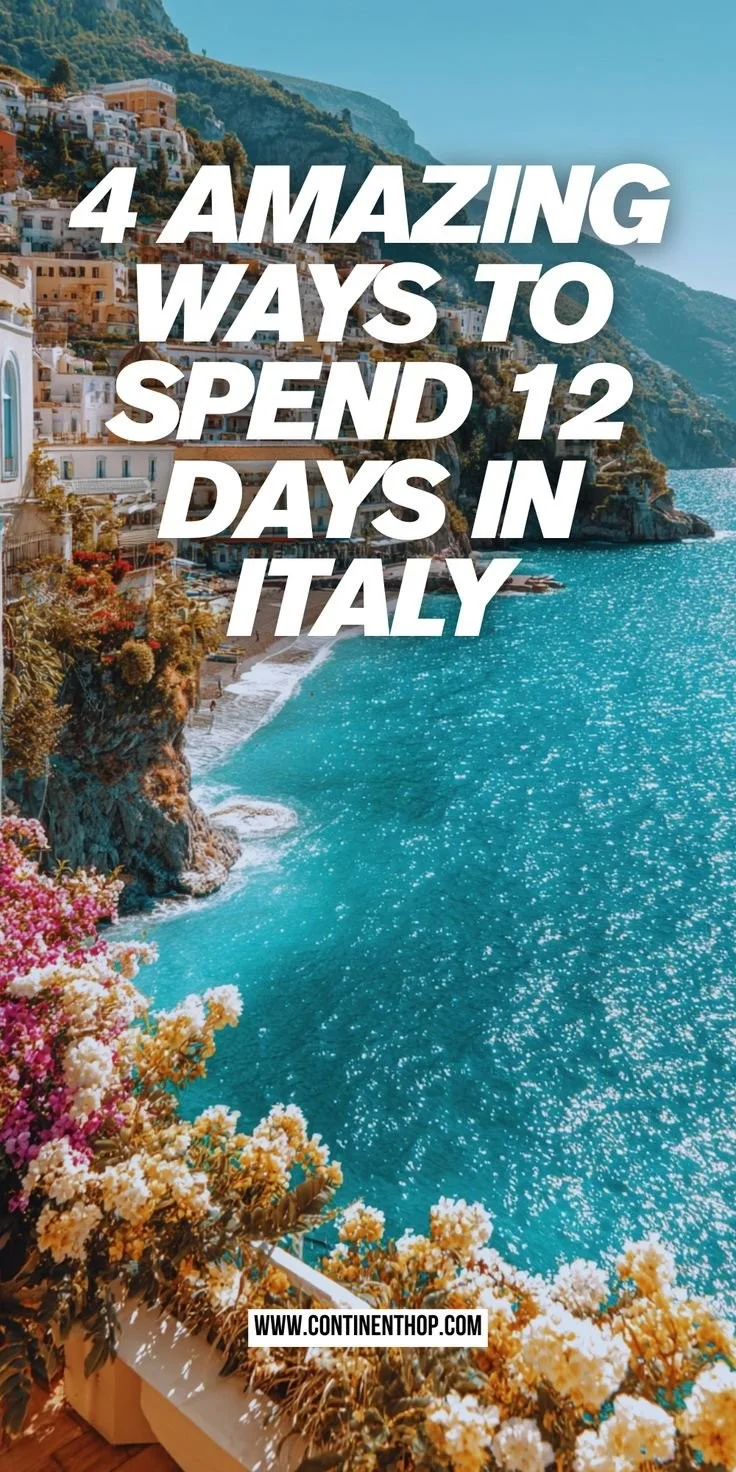
Italy in 12 days is a delightful sprint through history, art, food, and spectacular landscapes. This guide gives a day-by-day plan that balances iconic sights with slower-paced time to taste gelato, wander alleys, and linger over espresso. Before you go, consult this 20 traveling to Italy tips: your ultimate guide for practical pre-trip advice on packing, visas, and money matters.
Quick planning overview
- Best seasons: late spring (May–June) and early fall (September–October) for fewer crowds and pleasant weather.
- Travel style: mainly by train—fast, frequent, and scenic—so you can avoid driving and enjoy city-to-city travel.
- Book ahead: major museums, Vatican entry, and some Cinque Terre ferries require pre-booking during high season (2025 will be busy as tourism rebounds).
- Luggage: bring a carry-on-friendly bag for easier mobility on trains and cobblestone streets.
12-Day Italy Itinerary (day-by-day)
Day 1 — Arrival in Rome
Arrive, check into your hotel, and take it easy. Walk around the Centro Storico: the Spanish Steps, Piazza Navona, and the Pantheon are perfect low-effort introductions.
Day 2 — Ancient Rome
Spend the day at the Colosseum (book a timed entry), the Roman Forum, and Palatine Hill. Evening: dinner in Trastevere for authentic Roman cuisine.
Day 3 — Vatican City & Hidden Corners
Morning at the Vatican Museums and St. Peter’s Basilica (reserve a skip-the-line slot). Afternoon: explore Castel Sant’Angelo or lesser-known neighborhoods like Testaccio for local food.
Day 4 — Train to Florence + First Impressions
Take a morning train to Florence (1.5–2 hours). After check-in, visit Piazza del Duomo and climb (or admire) Brunelleschi’s dome from the outside. Evening stroll across Ponte Vecchio.
Day 5 — Florence Art & Food
Uffizi Gallery in the morning (pre-book), then the Accademia to see Michelangelo’s David. Sample Florentine steak and gelato; climb Piazzale Michelangelo at sunset for panoramic views.
Day 6 — Day Trip: Pisa or Siena
Choose Pisa to tick off the Leaning Tower (quick visit) or Siena for medieval streets and the gorgeous Piazza del Campo. Return to Florence for the night.
Day 7 — Travel to Cinque Terre
Head north to La Spezia, then transfer to the Cinque Terre villages. Base yourself in Monterosso or Vernazza and enjoy sunset by the sea.
Day 8 — Explore the Cinque Terre
Hike or take the local trains/boats between villages—Manarola, Corniglia, Vernazza, and Riomaggiore. Try the local pesto, seafood, and Sciacchetrà wine.
Day 9 — Train to Venice
Longer travel day to Venice (approx. 4–5 hours). Arrive mid-afternoon and wander piazzas and canals—St. Mark’s Square and the Rialto Bridge are classic early stops.
Day 10 — Venice sights & a gondola moment
Visit St. Mark’s Basilica and the Doge’s Palace (reserve a tour). Get lost in the calli (narrow alleys) and consider a sunset gondola or vaporetto ride on the Grand Canal.
Day 11 — Milan or Lake Como
Travel to Milan for fashion, the Duomo, and Leonardo da Vinci’s Last Supper (book months ahead), or head to Lake Como for alpine scenery and villas—each offers a different final-act vibe.
Day 12 — Leisure day and departure
If you stayed in Como, relax by the lake; if Milan, do last-minute shopping or museum time before heading to the airport or train station.
Where to save time (and where to linger)
- Save time by booking timed entrances for the Colosseum, Vatican, Uffizi, and Last Supper well in advance.
- Linger in neighborhoods rather than trying to see every museum—Trastevere (Rome), Oltrarno (Florence), and Dorsoduro (Venice) reward slow wandering.
Getting around
- Trains: Italy’s high-speed network (Frecciarossa, Italo) connects major cities; regional trains link smaller towns. Validate regional tickets if required.
- Local transport: Venice uses water buses; Cinque Terre relies on local rail and ferries. Buy multi-day local passes if you’ll use public transport heavily.
Accommodation recommendations
- Rome & Florence: central 3–4 star boutique hotels or well-located B&Bs for walking access.
- Cinque Terre: smaller guesthouses or family-run hotels—book early for sea views.
- Venice: stay on the main islands if you want easy access to attractions, but be prepared for higher prices.
Food & drink highlights
- Rome: cacio e pepe, carbonara, supplì.
- Florence: bistecca alla fiorentina, ribollita.
- Cinque Terre: fresh focaccia, anchovies, pesto.
- Veneto: cicchetti (small plates), risotto al nero di seppia.
- Try regional wines wherever you go—Italy’s variety is enormous.
Practical tips for 2025
- Tickets & reservations: plan at least 2–3 months ahead for high-demand attractions, especially in peak season.
- Cash vs. card: cards are widely accepted, but small cafés and markets may prefer cash.
- Respect local customs: many churches require modest dress; dining hours are typically later than in some countries.
Sample packing checklist
- Comfortable walking shoes, light layers, a compact umbrella, plug adapter, daypack, photocopies of travel documents, medications, and a reusable water bottle (Italy has many drinking fountains in cities).
Final safety and etiquette notes
- Watch for pickpockets in crowded tourist areas, especially on trains and at major sights.
- Tip modestly—service is often included, but rounding up or leaving small change is appreciated.
- Learn a few basic Italian phrases—locals value the effort.
Conclusion
If you want a slightly longer version or alternate routing ideas for a two-week stay, this detailed itinerary called The Best of Italy: Ultimate Two Week Italy Itinerary (14 Days) offers extended options and extra city suggestions to expand on the 12-day plan above.