
Budget travel guide 2026
Quick answer: Explore our Complete Costa Rica Travel Guide for tips on travel, attractions, and how to experience this beautiful country like a local.
In this guide
Suggested route
- Best time to visit: Dry season (December–April) for sun and easy trekking; green season (May–November) for fewer crowds, lower rates, and lush landscapes.
- Entry rules: Most visitors need a passport valid at least six months from arrival and a return or onward ticket; check visa rules for your nationality before departure.
- Health: Routine vaccinations are usually sufficient; vaccine and mosquito-bite precautions are recommended for some areas. Bring basic meds and motion-sickness remedies if you plan river trips.
- International flights: Juan Santamaría (SJO) near San José and Daniel Oduber (LIR) in Liberia are the main airports.
- Domestic travel: Short-haul flights save time for island or distant region travel. Buses are affordable and extensive; rental cars give flexibility but watch for narrow or unpaved roads in rural areas.
- Driving tips: 4x4s are useful for rainy-season travel and remote access. Drive defensively, obey local laws, and factor in slower speeds on mountain roads.
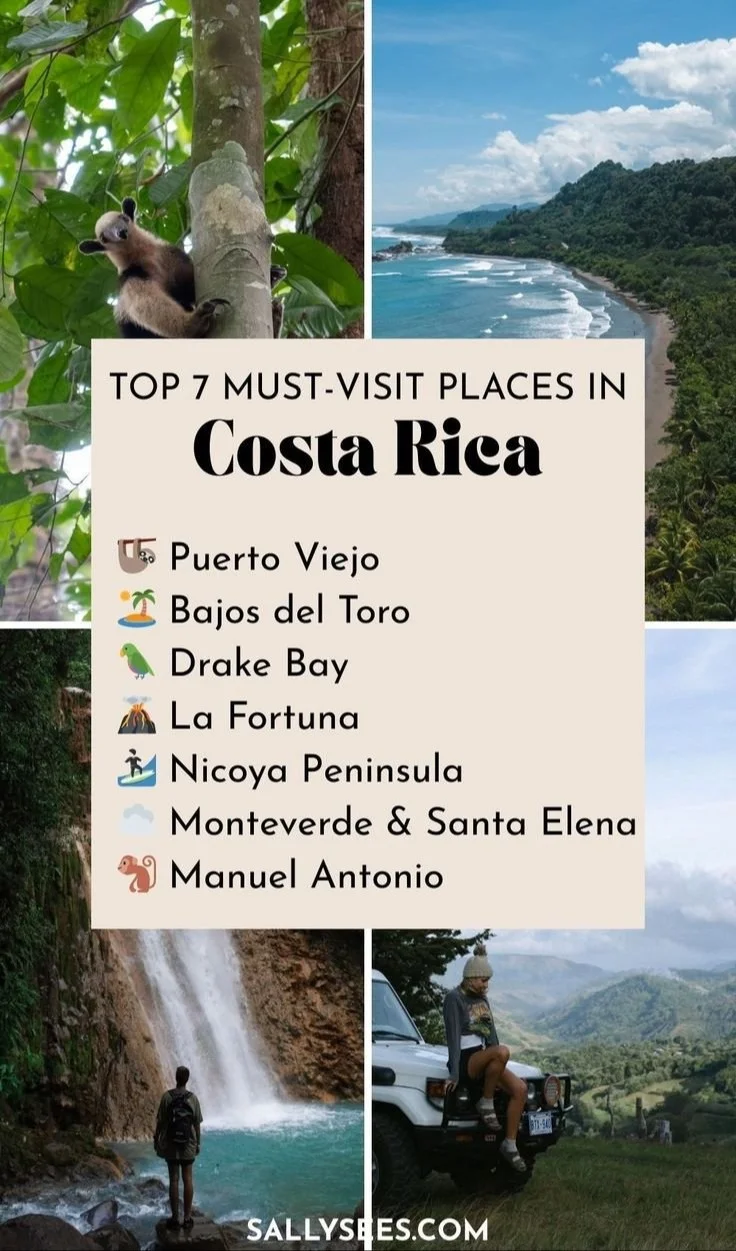
- Arenal / La Fortuna: Hot springs, Arenal Volcano views, waterfalls, and abundant adventure operators offering canopy tours and rafting.
- Monteverde Cloud Forest: Premier birding and hiking; best for quetzal sightings and serene cloud-forest walks.
- Manuel Antonio: Compact national park with beaches, hiking trails, and approachable wildlife viewing near coastal amenities.
- Nicoya Peninsula: Surf towns (Santa Teresa, Nosara), yoga retreats, and some of the country’s Blue Zones.
- Osa Peninsula / Corcovado: Remote rainforest, exceptional biodiversity, and unparalleled wildlife for more adventurous travelers.
- Wildlife watching: Dawn and dusk are prime for spotting monkeys, sloths, and birds. Hire local naturalist guides for better success.
- Surfing: Pacific coast offers waves for beginners to experts; many surf schools and board rentals at main beaches.
- Rainforest canopy: Zip lines and hanging bridges provide thrilling views and unique perspectives on rainforest ecology.
- Water adventures: Whitewater rafting and sea kayaking are widely available with varying difficulty levels.
- Relaxation: Natural hot springs, beachfront lodges, and wellness retreats are plentiful for low-key rest days.
- 5 days: San José → La Fortuna (Arenal) 2–3 days → Monteverde 1–2 days → return.
- 10 days: San José → Arenal → Monteverde → Pacific coast (Manuel Antonio or Nicoya) → relax and surf.
- 2 weeks: Include Osa Peninsula/Corcovado for a deeper rainforest immersion; combine with a coastal escape.
- Costs vary widely: budget travelers can get by with hostels and public transport; mid-range travelers use boutique lodges and car rentals.
- ATMs: Widely available in cities and tourist hubs; carry some cash when visiting remote areas.
- Tipping: Not mandatory but appreciated — 10% in restaurants if service charge isn’t included; small tips for guides and drivers.
- Natural hazards: Be aware of rip currents on beaches, aggressive weather in rainy months, and uneven forest trails.
- Personal safety: Costa Rica is relatively safe, but standard precautions against petty theft (watch belongings, lock your rental car) apply.
- Sustainable travel: Respect protected areas, avoid single-use plastics, and support local businesses and community-run tours.
- Lightweight rain jacket, quick-dry clothing, sturdy hiking shoes, reef-safe sunscreen, insect repellent, reusable water bottle, and a good pair of binoculars for birding.
- Electrical: 110V outlets with types A/B plugs; bring adapters if necessary.
- Visit national parks with certified guides to reduce impact and learn about conservation efforts.
- Choose lodges with sustainable practices (water-saving, waste reduction, local sourcing) to support ecological protection.
- Book popular lodges and excursions in high season well in advance.
- Keep an eye on weather forecasts when arranging multi-day treks or boat transfers.
- Learn basic Spanish phrases — locals appreciate the effort and it enhances interactions.
Conclusion
For detailed reviews to help you choose the best print and digital references, consider these Guidebook Recommendations for Costa Rica to guide your trip planning and on-the-ground decisions.2026 Planning Update for Costa Rica
A stronger Costa Rica plan starts with intent. Decide whether the trip is about price, scenery, comfort, food, events, outdoor access or a specific bucket-list moment. That decision makes the rest of the planning easier because every hotel, transfer and activity can be judged against the same goal.
For 2026, travelers should also compare total trip cost instead of only headline prices. A cheap hotel can become expensive if transport is weak, while a slightly higher nightly rate can save money if it includes breakfast, transit access or a better location.
Budget and Booking Tips
- Book refundable accommodation early, then keep comparing prices.
- Check airport, train or bus access before choosing where to stay.
- Plan one main paid experience per day instead of overloading the itinerary.
- Use grocery stops, local transport and shoulder-season dates to control costs.
- Keep a small buffer for weather, delays, luggage storage or last-minute transfers.
Internal Planning Links
- 19 Must-See Locations In South America
- Costa Rica Jungle Adventures (2025): 5 Epic Spots to Explore
- The 10 Best Costa Rica Luxury Beach Resorts
Official Resource to Check
Before finalizing the trip, check an official resource for current rules, entry requirements, park access, event details or health guidance: U.S. State Department international travel information.
Common Mistakes to Avoid
The most common mistake is planning from one viral photo or one cheap price. A useful itinerary checks distance, opening times, weather, local holidays, transfer costs and whether the experience still works if plans change.
Another mistake is ignoring the first and last day. Arrival and departure days often decide whether a trip feels smooth or stressful, so keep them lighter and avoid booking the most important activity immediately after a long transfer.
FAQ
How do you plan Costa Rica on a budget?
Start with flexible dates, compare accommodation outside the most expensive zone, check transport before booking and keep one paid activity as the main highlight.
What should you check before booking Costa Rica?
Check season, local transport, cancellation rules, official travel updates, safety requirements and whether the final cost includes food, transfers and extra fees.
Is Costa Rica worth it in 2026?
Yes, if the trip matches your budget, season and travel style. A focused itinerary usually gives better value than trying to visit too many places at once.
Plan this trip smarter
Use this guide as a starting point, then compare dates, accommodation areas and transport before booking. The best budget trips usually come from a simple route, fewer base changes and one or two memorable paid experiences.
Budget snapshot
| Cost area | Smart planning note |
|---|---|
| Accommodation | Book near the main area you will actually use, not only the cheapest map result. |
| Transport | Limit long transfers and group nearby stops into the same day. |
| Food | Mix local casual meals with one higher-value experience. |
| Activities | Choose the paid experience that defines the trip, then use free viewpoints, walks and beaches around it. |